The year, told through paper.
On absorbent paper the sheet decides as much as the hand: how fast ink is drunk, how far it spreads, whether a second wash crosses the first or dissolves it. Every paper of the year is registered with its maker, fibre, weight and date of manufacture, and every painting with the paper it was made on. The inks.
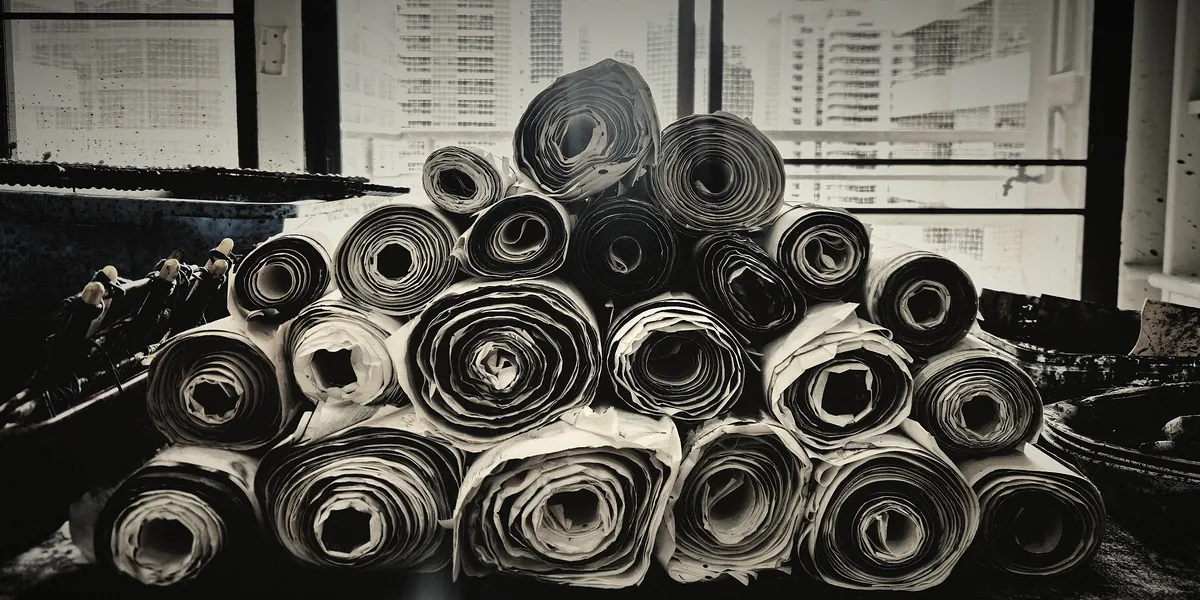
On the table.
Papers ran side by side, not one after another: in February, eight were in use within the same weeks. Then in April a premium line of bark papers from one mill arrived within ten days, and from then on it carried about two paintings in every three.
Photo days, paper by paper.
Each dot is a photo day, sized by how many paintings on that paper were photographed. Rows in paper-number order. Select a paper for its full record.
What each paper is.
Weight is computed from each pack's weight and sheet count; sizing, fibre and production date come from the maker's card. Unknown means unknown: nothing is filled in by guesswork.
Two editions, one name.
S12 and S14 come from the same mill, with the same product name and fibres on their cards. The packs name different editions: S12 is the Special Effect Xieyi Work Edition, made for expressive painting; S14 is a lighter edition. The weights tell the difference before the brush does.
49.6 against 43.1 g/m².
Weight per square metre from each pack (50 sheets of 97 × 180 cm): S12 made 7 June 2025, S14 made 8 April 2026. About 13% lighter, and more of the light comes through it. Below: how the lighter edition behaved under Peter's brush, against what is typical for the type.
“A very noticeable, major downgrade from S12: weak and flimsy, bleeds, can barely hold an edge; I have to size it myself to have a chance with it.”Peter Yuill on S14 · material card, 2026.09.30
What is known, and what is assumed.
How a paper behaves (absorbency, spread, edge, layering, wet strength, grip for dry-brush, cockling, mounting) is recorded three times, side by side and never blended: what the maker states, a typical value for that kind of paper, written as a reference and labelled so, and what Peter observed at the table. Across the 14 papers and 8 behaviours, the makers' cards state none, Peter has recorded 4, and the remaining 108 are typical values only, or blank. The site shows that gap rather than hiding it.
S14: where Peter disagreed with the type.
The one paper where Peter's own observations contradict what is typical for its kind: it spread more, held a softer edge and was weaker wet than a paper of its type should be.
What came out on each paper, and its year.
Each paper as its own small constellation: its paintings on the year's clock, what the engine read on it, the inks it took, and what the Oracle found about the paper itself. Above each, two records kept apart. Peter's own triage of each painting at the time (save, probably trash, trash), from his early system, since retired. And the current engine's average reading of the paintings it has read on that paper. Papers were used in different months, so differences here mix the paper with the time it was used; the Oracle compares papers within the same weeks before it reports anything.
1 V23 readings: too few to profile
38 V23 readings · bead: this paper · ring: every reading
22 V23 readings · bead: this paper · ring: every reading
17 V23 readings · bead: this paper · ring: every reading
40 V23 readings · bead: this paper · ring: every reading
45 V23 readings · bead: this paper · ring: every reading
12 V23 readings · bead: this paper · ring: every reading
Click a paper to open it full size; the arrow keys step through the papers.