Ink, paper and brush.
A practitioner's guide to the materials and judgement of ink painting, written from a year of first-hand studio data: 402 large paintings, every paper and ink registered, every sheet measured. General facts are kept to what is well established; everything else is the archive's own evidence.
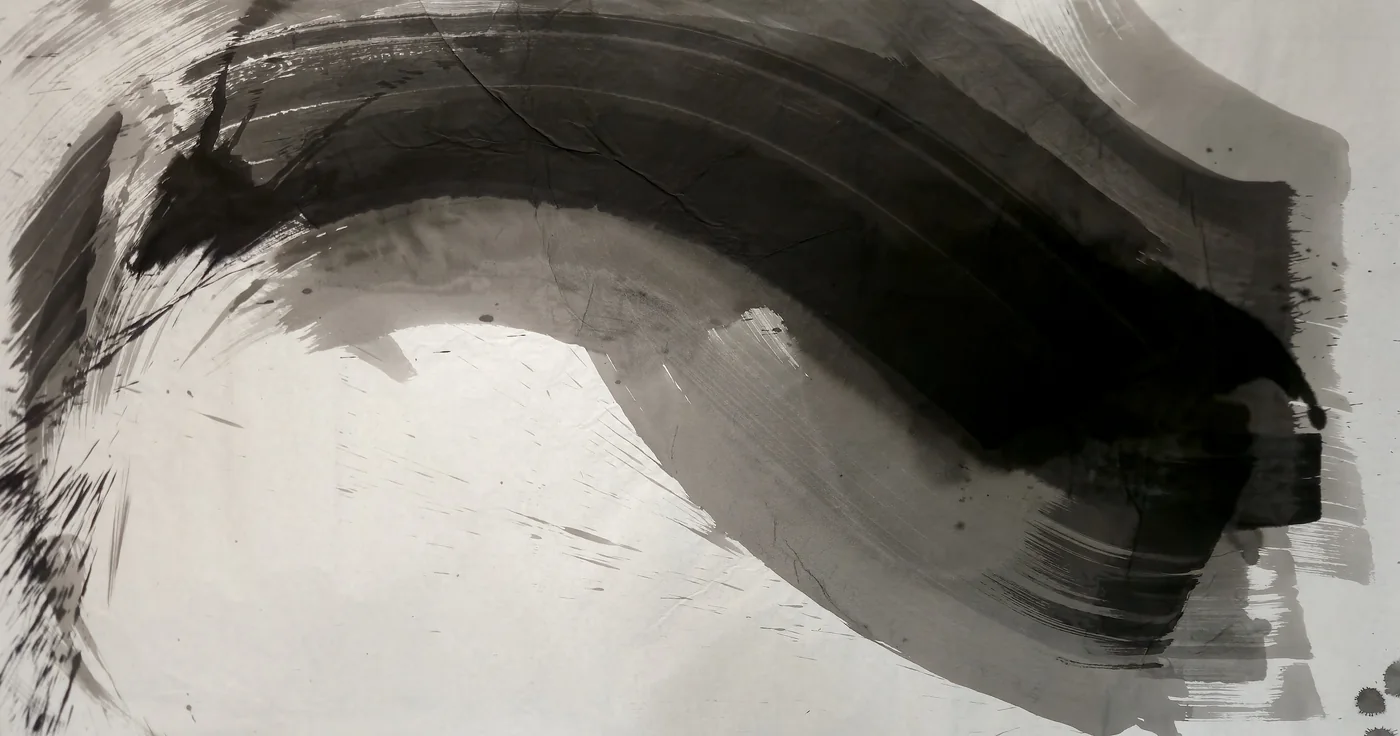
What Xuan paper is, raw, half-raw and cooked sizing, and first-hand data on fourteen Chinese papers used for a year of large ink painting.
02Sumi ink: soot, binder and the many blacksWhat sumi ink is made of, pine soot against oil soot, ink sticks against bottled ink, the five tones of ink, and ten blacks used in one year.
03Feibai, flying white: the dry-brush streak in ink paintingWhat feibai (flying white) is, where the term comes from, how it forms, and how often it appeared across 260 paintings tagged blind.
04Brushes for large-scale ink paintingGoat, weasel and mixed-hair brushes, how loading and pressure shape a mark, and composite brushes up to about 70 cm wide.
05How to read an abstract ink paintingFive qualities to judge an abstract ink painting by, what each looks like from weak to masterful, and the flaws to look for, from 3,600 named flaws.
06Ink painting and Western abstraction: a short lineageFrom the Six Principles and Song splashed ink to Tobey, Kline, the Bokujinkai, Hong Kong's New Ink movement and Soulages: where East Asian ink and abstraction meet.