Feibai, flying white: the dry-brush streak in ink painting
What feibai (flying white) is, where the term comes from, how it forms, and how often it appeared across 260 paintings tagged blind.
What feibai is.
Feibai (飞白), 'flying white', is the broken texture in a stroke where the white of the paper shows through: the brush has run partly dry, or moved fast enough that its hairs skip across the fibres. In calligraphy and ink painting it is prized as the visible trace of speed and force. Tradition credits its invention to the Han dynasty scholar Cai Yong, who is said to have seen workmen whitening a wall with brooms.
How it forms.
Three things make it: how much ink is in the brush, how fast the brush travels, and how hard it presses. Fast and light, with a partly loaded brush, gives long parallel streaks along the line of travel. A brush that is simply empty gives ragged, faint gaps at the end of a stroke. The paper matters too: sized and harder papers break the stroke more readily than soft raw paper, which drinks the ink into the gaps.
Counted, blind.
Instead of describing feibai in general, this archive counted it. Peter Yuill tagged 260 paintings himself, without seeing the engine's readings first.
208 of 260.
Peter Yuill's own blind tags, one brush stroke for every painting: his own dry stroke where the flying white is there, his loaded stroke where it is not. In this practice, made with wide brushes moving fast across large sheets, flying white is the norm. Paintings with it are rated by the engine about a third of a point higher on average than those without, too small a difference to read as cause on its own.
In the archive.
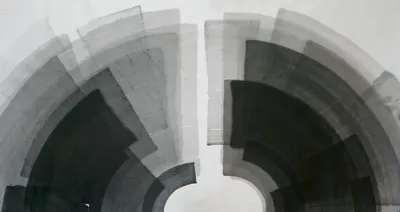
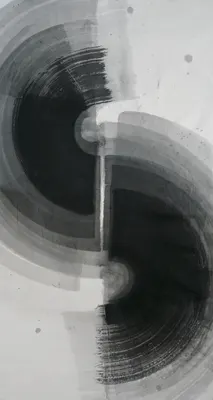
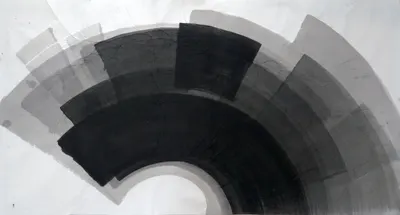
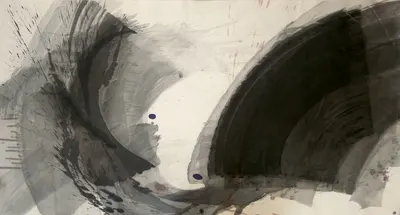
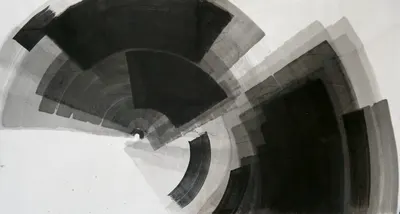
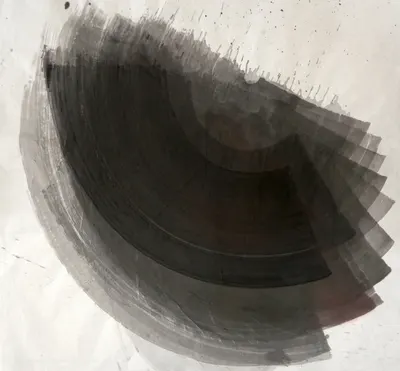
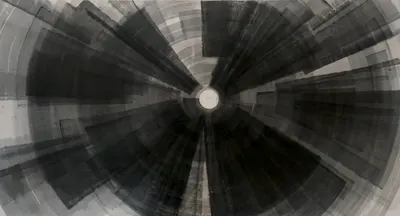
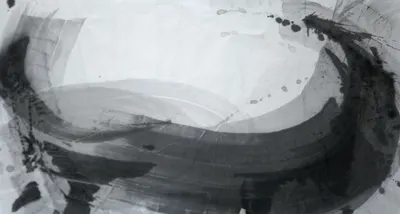
Paintings from the Crucible Year that show it.
Questions and answers.
Plain answers to the questions most often asked.
What is feibai in Chinese painting?
Feibai (飞白), 'flying white', is the streaked, broken texture where white paper shows through a stroke, because the brush is running dry or moving fast enough for its hairs to skip. It is valued as a sign of speed and energy in calligraphy and ink painting.
Where does the term flying white come from?
Tradition credits the Han dynasty scholar Cai Yong, said to have devised the style after watching workmen whitewash a wall with brooms, which left streaks of the surface showing through.
Is feibai a mistake?
No. It can come from a brush that is simply exhausted, but when it comes from speed and pressure it records the movement of the stroke and is deliberate. Reading which is which takes looking at the direction, spacing and crispness of the streaks.
How common is feibai in large abstract ink painting?
In this archive, Peter Yuill tagged 260 paintings blind for feibai: present in 208, absent in 36, unsure in 16.