Sumi ink: soot, binder and the many blacks
What sumi ink is made of, pine soot against oil soot, ink sticks against bottled ink, the five tones of ink, and ten blacks used in one year.
What sumi ink is.
Sumi (墨, mo in Chinese) is carbon soot held in a binder. Traditionally the soot is collected from burning pine or vegetable oil, kneaded with hot animal glue, pressed into sticks and dried slowly; the painter grinds the stick on a stone with water. Bottled liquid ink, first sold in Beijing in the nineteenth century, does the grinding in advance and often replaces the glue with synthetic resin. Because carbon is so stable, a black that is fixed in the paper stays black.
Pine soot and oil soot.
The soot sets the colour a black turns when thinned. Pine soot inks dilute to cool, slightly blue greys and dry matte; oil soot inks stay warmer and glossier. Modern carbon black behaves differently again. The binder decides flow: animal glue lets a wash layer cleanly over another once dry, while a heavy resin can make ink sit and shine.
From charred to clear.
One common naming of the tones of ink, from almost dry black (jiao) to the palest wash (qing). The Tang critic Zhang Yanyuan wrote that ink, used well, contains all five colours.
Ten blacks, one year.
Every ink used this year is registered with maker, country, binder and soot. 397 of the year's 402 paintings were made with two or more blacks at once, mixed for tone and flow.
In the archive.
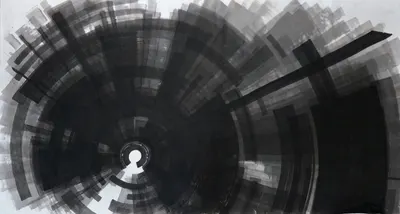
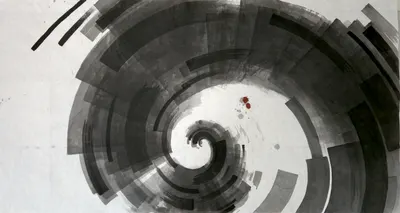
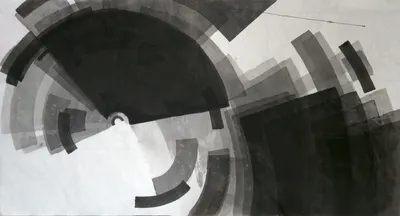
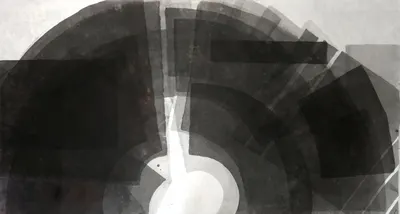
Paintings from the Crucible Year that show it.
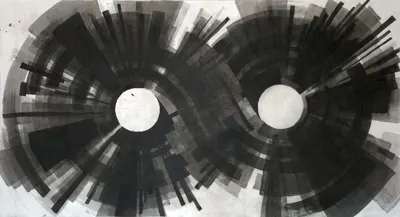
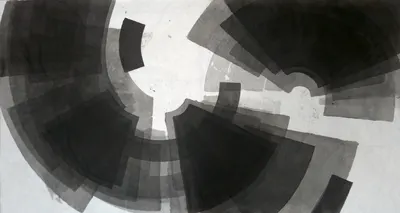
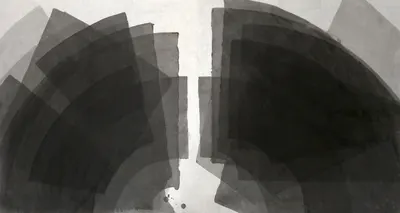
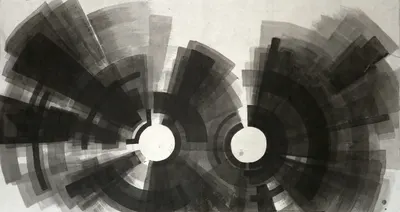
Questions and answers.
Plain answers to the questions most often asked.
What is sumi ink made of?
Sumi ink is fine carbon soot bound in a binder, traditionally animal glue. It is sold as a solid stick, ground with water on an ink stone, or as bottled liquid ink, which often uses a synthetic binder.
What is the difference between pine soot and oil soot ink?
Pine soot (songyan) ink is made from burnt pine and tends toward cool, bluish greys when diluted, with a matte surface. Oil soot (youyan) ink is made from burnt vegetable oil and tends toward warmer blacks with more gloss.
What are the five colours of ink?
A Chinese idea, recorded by the Tang critic Zhang Yanyuan, that ink handled well holds all colours. Painters name a scale of tones from charred black to the palest wash; one common version is charred, thick, heavy, light and clear.
Is bottled ink as good as an ink stick?
It is faster and consistent, which matters at large scale, where a single painting can need litres. Stick ink gives more control over tone and texture. This archive used bottled inks from China and Japan, often several at once.
Does sumi ink fade?
Carbon black is among the most lightfast pigments there is. Fading in an ink painting usually comes from added colours or from the paper, not from the carbon.