T_253
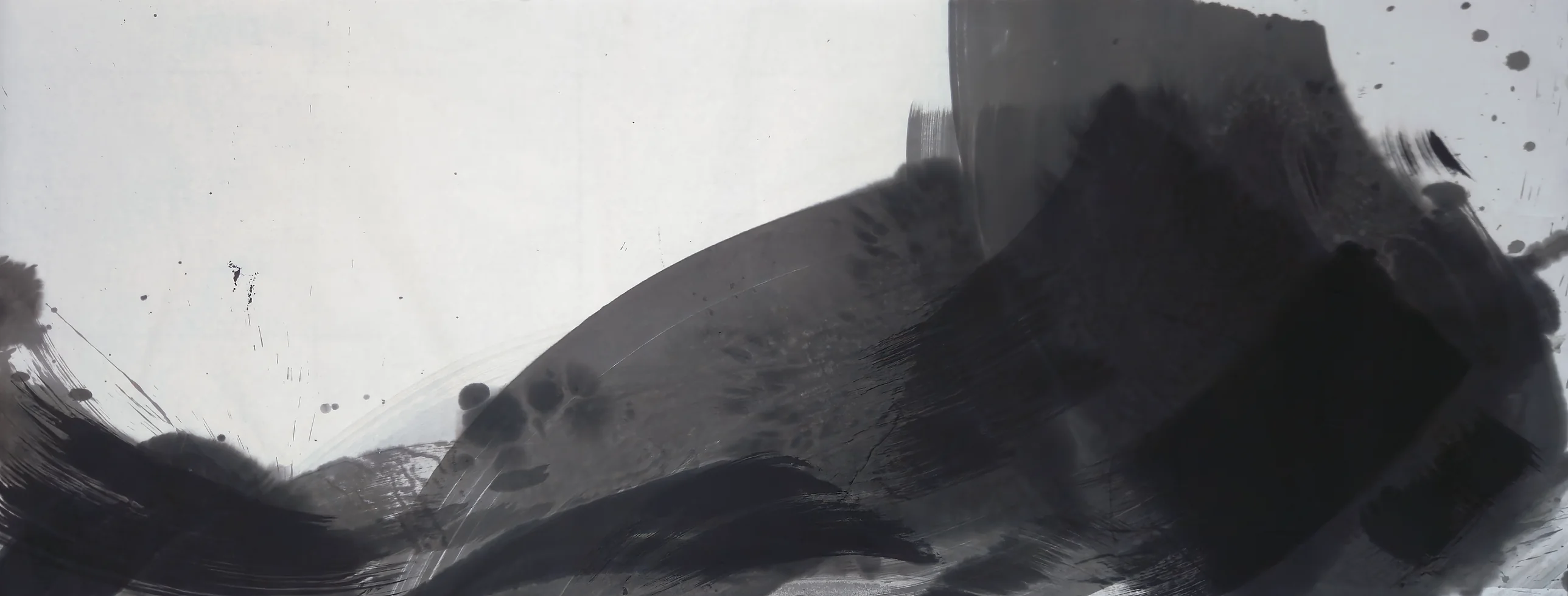
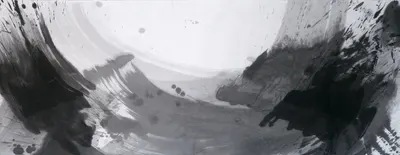
The engine's readingA grey hill climbs from lower left across a long pale sheet into a stack of black slabs at the right edge, under an open sky.
Record- Date
- 2026.04.21
- Dimensions
- 70 × 180 cm
- Rating
- 5.2
- Paper
- Tanxi Thickened Grade A Special Jing Pi Small 6-Foot (raw)
- Ink
- Yi De Ge Refined Ink Juice, Boku-Undo Genso, Yi De Ge Yun Tou Yan
The round blots on the grey hill are fingertips. I decided that and I am keeping it. My grandmother pressed her thumb into bread dough to test it, a row of dents, and the dough rose slowly around the holes as if it remembered the hand. These dents never rise. Above them the dark comes down square, the way a coat lands on a bed when you come in tired and drop everything at once. I can still smell that coat: wet wool, cold air from outside, a palm laid on my forehead to check for fever. Under all that black the hill stays warm. The dents sit where she left them, slowly filling with flour.
The reading
Written by the engine after V23's reads, from the settled findings, and checked by hand before approval. It explains V23's numbers and may not change them.
- Structure
- grey arc mound across centre, pale vertical column, dark slabs stacked at right
- Movement
- rises lower left to upper right; column and slabs stand upright against it
- Coverage
- ink on about two thirds of the paper
- Tone
- two tonal steps, weighted dark
- Layering
- three kinds of pass; readable at the column edge and in the centre
- Edges
- crisp on the arc's rim and tapered sweeps; soft and broken at right fringes
- Feibai
- present in the lower-left sweeps and the long dark stroke at lower centre
- Open paper
- wide shaped sky at top left, bounded below by the arc's rim
- Chance marks
- blots and rings in the grey arc; cloudy patch upper right; spatter, mostly top right
- Frame
- ink runs off left, bottom and right; column touches top; top left stays open
A grey hill climbs out of the lower left, swells across the middle of the paper, and keeps rising until it jams against the right edge. Above it a wide pale sky is left open. The hill's rim draws its lower border.
The hill is where the sheet comes alive. Its upper wall is one long curve that holds its line, and inside it the raw paper has pulled the grey into grain and drift. Below, the sweeps at lower left thin as the brush lifts, their hairs parting into streaks of bare paper.
Then the right third shuts down. Dark rectangles stand there, bulky and stiff-walled, and the black inside them barely moves. They bury the greys beneath, so the order of passes is lost exactly where the weight gathers, and the bottom right sags under it. In the hill, round blots and rings, left by a fast and thirsty paper, sit loose on the form instead of building it.
The climb is real and the sky is well cut. Everything else is spent on the slabs, which take most of the ink and give little back. A fine curve ends up carrying a load it cannot lift.
The rating
T_253, rated 5.2
The combined score, out of 10: V23's reading of the photograph as the read half and V24's twelve tests on the 16-bit file as the measured half, added and divided by 10. The scale is relative to this archive. How each half is made is on the Method page.
- Form
- 2.0 · built
- Tonal depth
- 1.0 · thin
- Layering
- 2.0 · legible
- Composition
- 2.0 · working
- Material and surface
- 1.0 · flawed
- Mass
- 8.7 of 10
- Tone
- 7.8 of 14
- Void
- 8.0 of 8
- Flow
- 4.8 of 10
- Balance
- 1.6 of 8
How it was measured
What V24 measured.
Plain physical facts with no model involved. Across the year they track how the practice changes. On one sheet they cannot say whether a mark is any good. Millimetres read a few percent high, because the photographs are cropped just inside the paper's edge.
The width of the ink mask along its medial axis.
Optical density at the 75th percentile of the sheet.
The radius of the largest circle of open paper.
How far the marks align across the sheet. Lower means they run several ways.
Left and right asymmetry of the ink. Lower is more even.
Pixels to the millimetre in the TIFF these were measured from, with the studio light removed.
Read by the Visual Analysis Engine, version 23.8, on 2026.10.06: measured by code, then read 5 times by Claude Opus 5.5 against three reference paintings (R1 to R3), each read independent of the others. How the engine works.
Three views of one sheet.
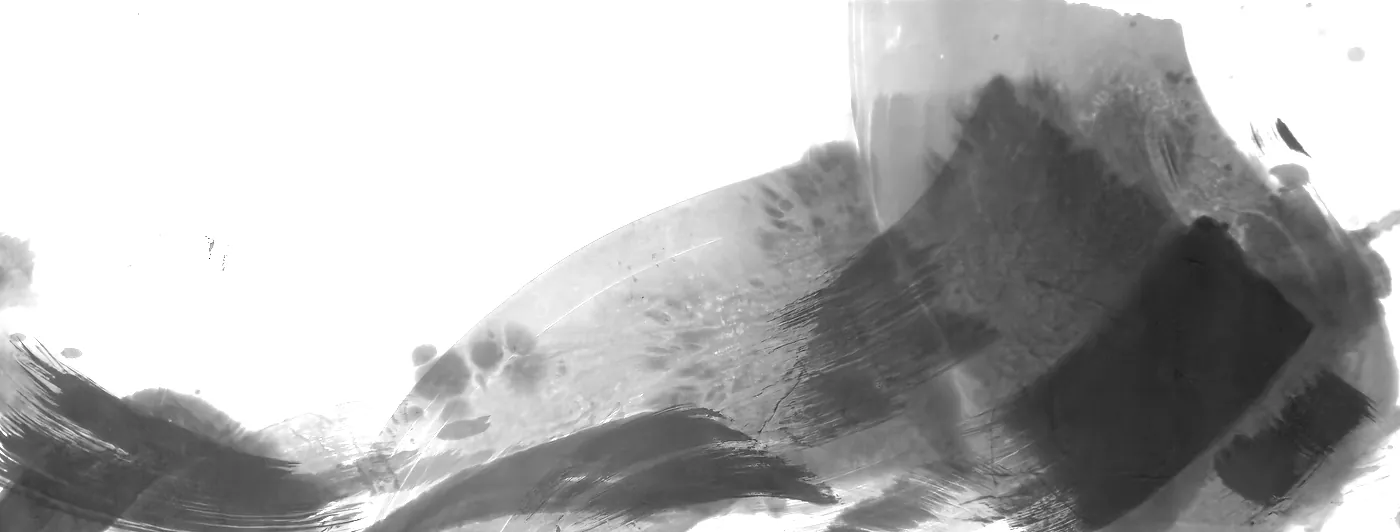
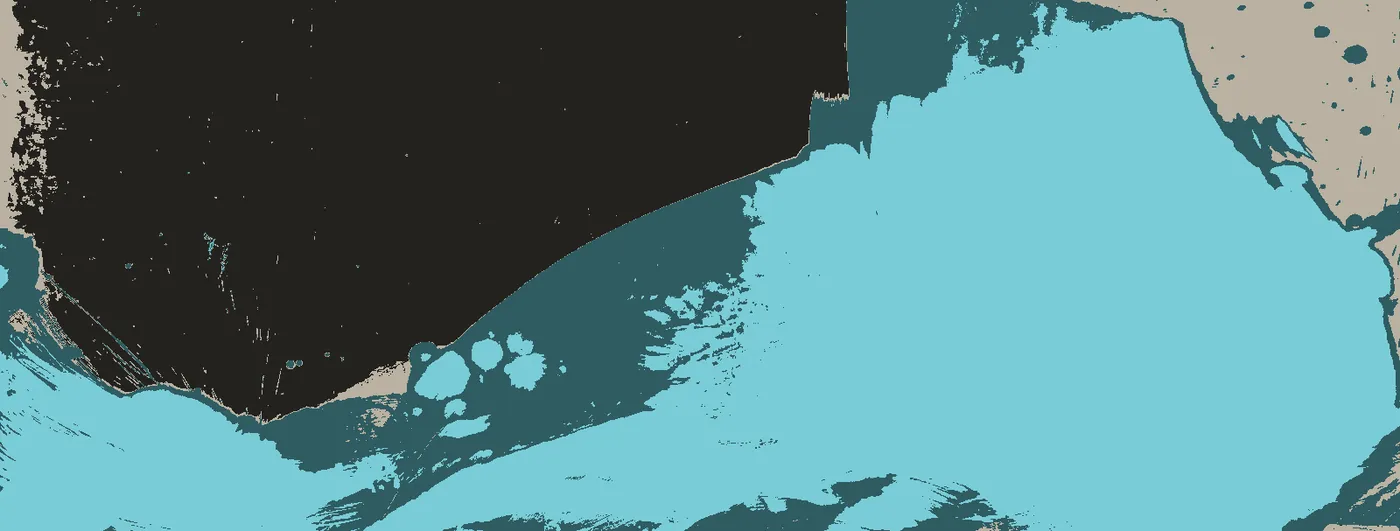
Left, the photograph. Centre, the tone stretch the model is shown beside it: the darkest 45% of tones spread over the whole range, so flat black, banding and stains show. Right, every pixel as the measuring code classes it: cyan black ink, deep teal translucent grey, stone the palest ink, near black bare paper.
2 families of tone.
Every inked pixel's brightness in 64 bins, smoothed; each circled peak holds at least 4% of the ink. Two or fewer: Tonal depth is held at the bottom rung whatever the model reads. A dense sheet of many translucent passes can count low here, so Layering is left to the reads. Life inside the black: 0.057 (under 0.045 reads as flat).
Five reads, one answer.
Each quality placed on its ladder by each read, and the mean the engine keeps.
READ 1, IN ITS OWN WORDS
“An ordinary sheet: a rising grey arc and black blocks give it direction, but the right-hand slabs are stiff and flat, and blots in the grey arc weaken the surface.”
The grey arc and the lower-left sweeps follow the brush's travel. The dark square blocks at right are slab-like and stiff.
WEAKEST Bulky dark rectangle at right, slab-like
STRONGEST Sweeping arc of the grey hill crossing centre
Only two tonal steps, but modulation is 0.057. The central arc shows spotting and grain, while the right black blocks are largely flat.
WEAKEST Black rectangle at right, flat inside
STRONGEST Central grey arc with spotted, grained interior
The pale vertical band, the grey arc and the black blocks read as distinct passes. Where they overlap at right, they partly merge.
WEAKEST Right-hand darks fuse with grey beneath
STRONGEST Pale vertical band behind the dark masses at top right
The mass rises from bottom left to top right, leaving a large shaped area of empty paper at top left. The right side is heavy and congested.
WEAKEST Bottom-right crowded and heavy
STRONGEST Rising diagonal from lower left to upper right
Round blots and bloom rings sit in the central grey arc, and a cloudy mottled interior shows near the top right. All are visible in the colour view.
WEAKEST Blotted rings inside grey arc
STRONGEST Dry-brush edges of the lower-left sweeps
6 distinct places, 2 major.
Each read must name every flaw and where it is, in a ninth of the sheet. Here the reads named flaws in 6 distinct places, 18 mentions in all across 5 reads; the number in each ninth is how many times a flaw was named there. Reads agreeing on a place strengthen the evidence for one flaw; they do not multiply it. A major flaw holds Material and surface at rung 1.
Measured from the 16-bit master.
The previous engine (V22) measured this sheet's master file: 1 principal ink mass traced (cyan), 0 enclosed voids at true size in their grid cells (amber), the main gesture from start to end (red). Of 14 edge segments, 71% crisp, 21% soft or bloomed, 7% broken.
V23's rules and arithmetic, and every figure under its own name, are in the Archive record.
Date
2026.04.21, day 114 of the Crucible Year, one of 14 paintings from that date (7 shown). 63 works were registered in the fourteen days before. Paintings are dated by the day their batch was registered and photographed; each was finished that day or within the few days before. Phase: P2 The Switch (working title).
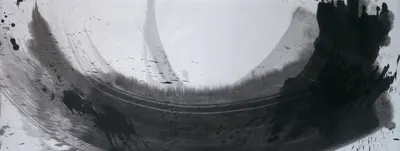
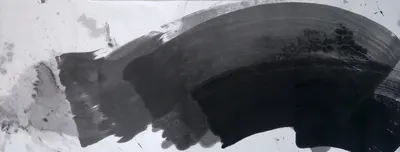
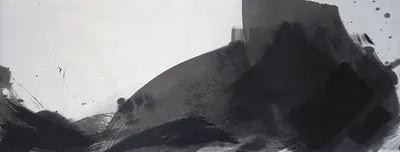

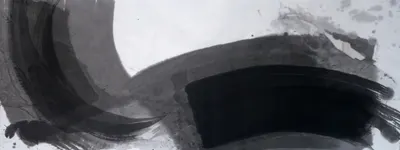
T_253 among all 419
Every painting of the year by date; this one is outlined.
Materials
- Paper
- Tanxi Thickened Grade A Special Jing Pi Small 6-Foot (raw), Anhui Jingxian Tanxi Xuan Paper Art Products Co., Ltd., made 2015.11.19
- Ink MB4
- Yi De Ge Refined Ink Juice, Yi De Ge (Beijing)
- Ink MB5
- Boku-Undo Genso, Boku-Undo
- Ink MB6
- Yi De Ge Yun Tou Yan, Yi De Ge (Beijing)
Related