T_286
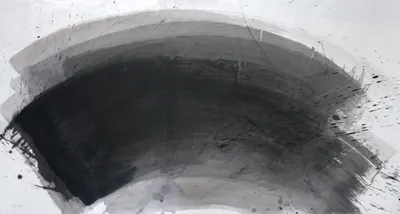
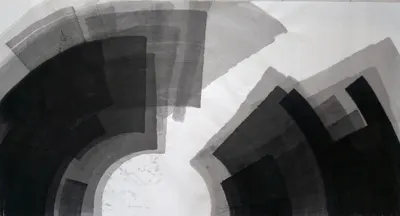
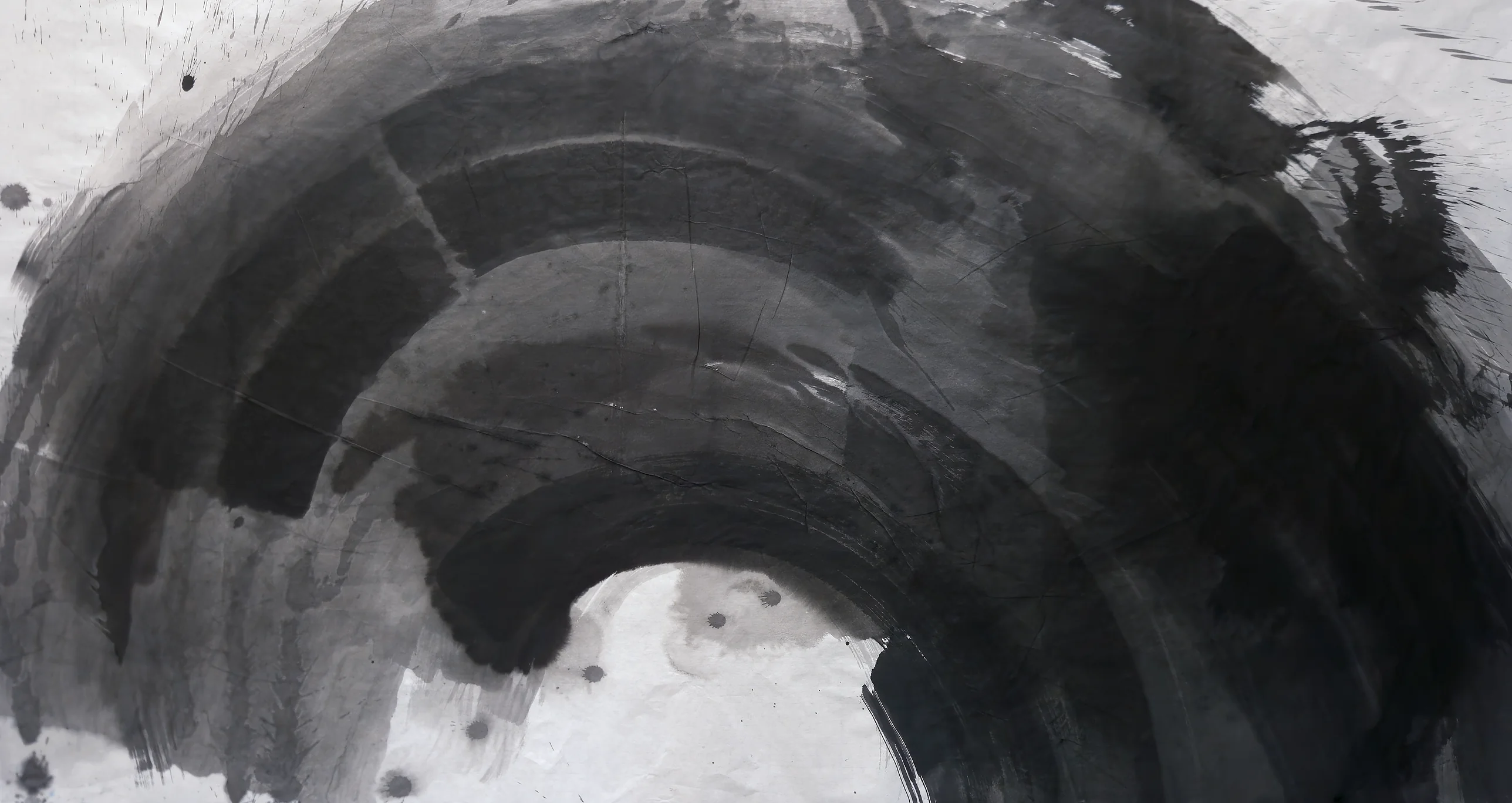
The engine's readingA great arch of grey and black ink swings over a pale opening, banded and orderly on the left, heaped into one dark slab on the right.
Record- Date
- 2026.05.07
- Dimensions
- 97 × 180 cm
- Rating
- 5.3
- Paper
- Red Star Mo She Special Effect Xieyi Edition, half-raw (June 2025 batch)
- Ink
- Yi De Ge Refined Ink Juice, Boku-Undo Genso, Yi De Ge Yun Tou Yan
Someone in this house takes all the blankets. The left side gives it away: a thin grey edge of sheet, tucked, folded and refolded the way a careful person does it. Then the right side, a heap. Every layer dragged over the last until it is one warm dark hill that breathes slowly and will not be argued with. Underneath, a small white gap where the cold gets in, and on it the grey ghost of a cup of tea set down in the small hours and forgotten. I would not wake them. I would lie on my narrow strip, awake, holding the corner of the one fold that is still mine.
The reading
Written by the engine after V23's reads, from the settled findings, and checked by hand before approval. It explains V23's numbers and may not change them.
- Structure
- concentric arc bands forming one arch over an opening at bottom centre
- Movement
- rotating sweep up the left, over the top, down the right; left drips fall straight
- Coverage
- ink on about nine tenths of the paper
- Tone
- two tonal steps, weighted dark
- Layering
- two kinds, grey outer arcs and darker bands; readable upper left, fused right
- Edges
- crisp band walls upper left; dry broken inner arc; ragged right mass; soft wash in opening
- Feibai
- along the inner arc's right flank, beside the white opening
- Open paper
- rounded arch of white at bottom centre; thin margins at top corners
- Chance marks
- spatter at left and bottom; grey stain with drops in opening; creases across arcs
- Frame
- runs off left, right, bottom and top centre; top corners and bottom centre stay open
A single arch of ink fills the paper, swinging from lower left over the top and down the right, around a pale opening at bottom centre. The rotation reads at once. The trouble is where it lands.
The best of it sits upper left. Grey outer arcs lie under darker segmented bands, and the half-sized bark paper keeps each pass apart, so the order stays legible and a banded grain shows inside the segments. Where the inner arc drops beside the opening, the hairs part into streaks of bare paper and the stroke keeps its speed.
On the right the arch stops being an arch. Dark over dark has fused into one bulky slab with a ragged outer edge and a cloudy interior that blooms instead of deepening. The paper can hold layers; it was given too many. The opening, the sheet's one breath, carries a milky grey stain and stray drops against the inner arc. Creases cross the bands, and the sheet absorbs them.
The left half is a good start, and the right half spends it. That leaves a clear movement and not much more.
The rating
T_286, rated 5.3
The combined score, out of 10: V23's reading of the photograph as the read half and V24's twelve tests on the 16-bit file as the measured half, added and divided by 10. The scale is relative to this archive. How each half is made is on the Method page.
- Form
- 2.0 · built
- Tonal depth
- 1.0 · thin
- Layering
- 1.8 · legible
- Composition
- 2.0 · working
- Material and surface
- 1.0 · flawed
- Mass
- 8.0 of 10
- Tone
- 7.2 of 14
- Void
- 6.4 of 8
- Flow
- 5.2 of 10
- Balance
- 6.4 of 8
How it was measured
What V24 measured.
Plain physical facts with no model involved. Across the year they track how the practice changes. On one sheet they cannot say whether a mark is any good. Millimetres read a few percent high, because the photographs are cropped just inside the paper's edge.
The width of the ink mask along its medial axis.
Optical density at the 75th percentile of the sheet.
The radius of the largest circle of open paper.
How far the marks align across the sheet. Lower means they run several ways.
Left and right asymmetry of the ink. Lower is more even.
Pixels to the millimetre in the TIFF these were measured from, with the studio light removed.
Read by the Visual Analysis Engine, version 23.8, on 2026.10.06: measured by code, then read 5 times by Claude Opus 5.5 against three reference paintings (R1 to R3), each read independent of the others. How the engine works.
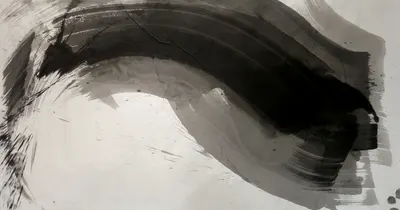
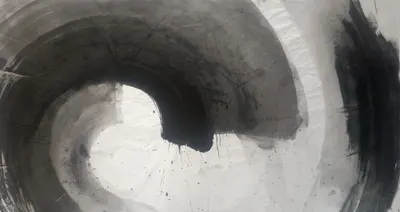
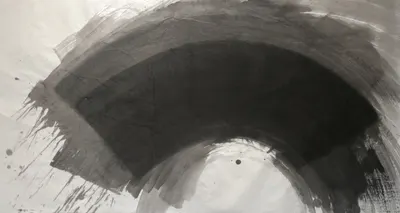
Three views of one sheet.
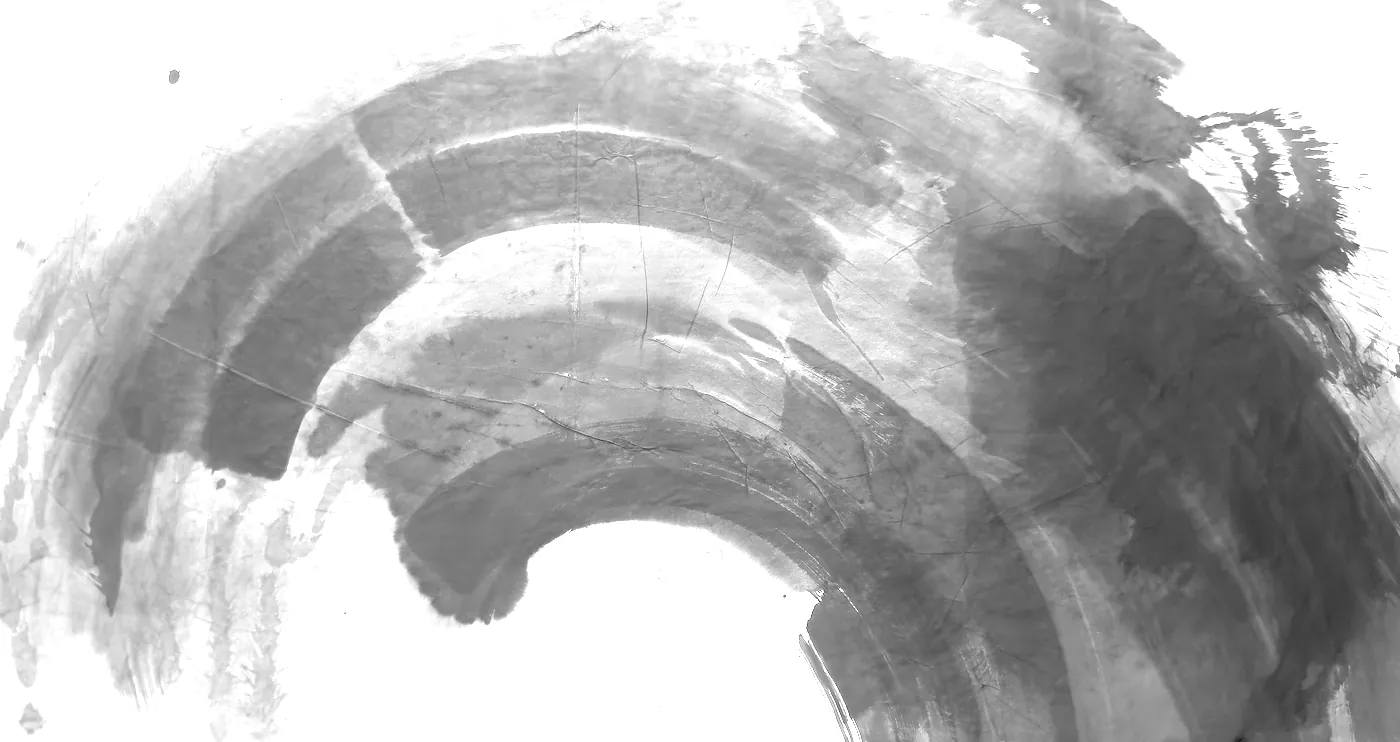
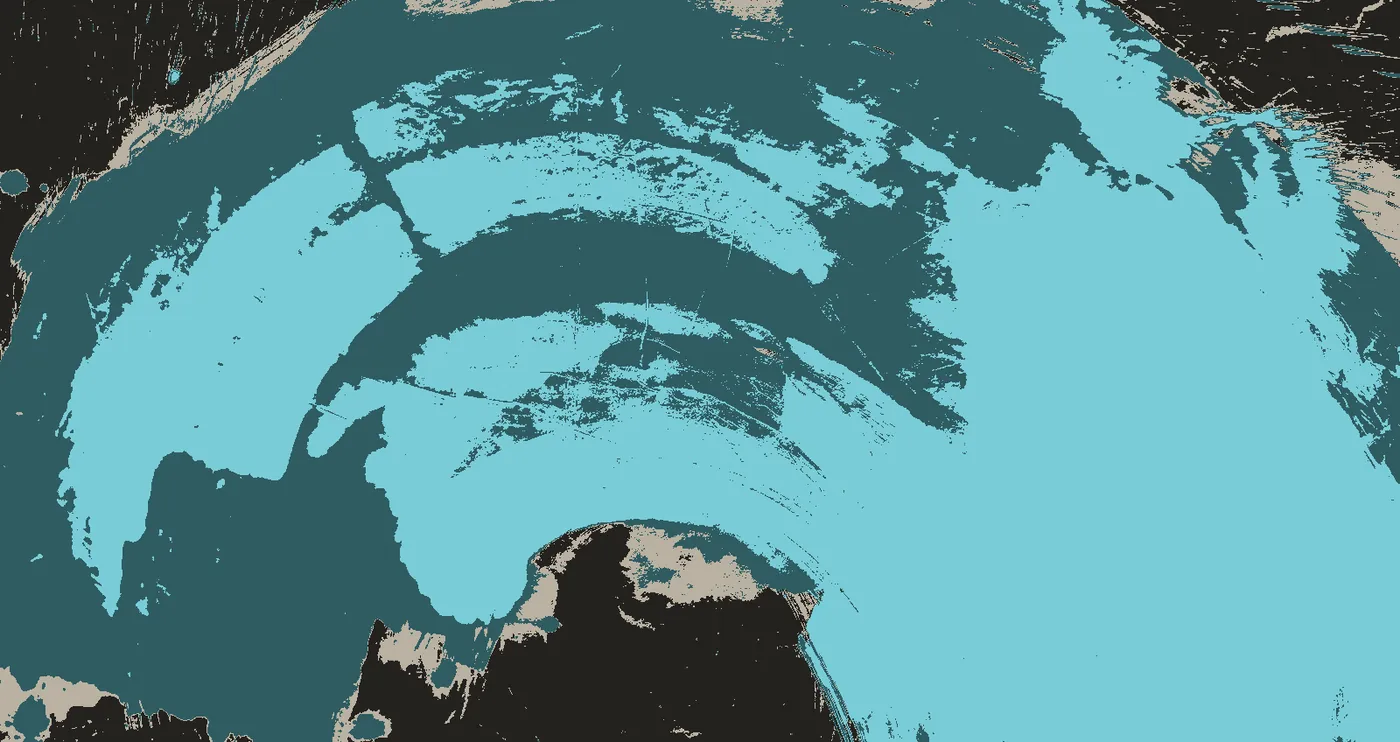
Left, the photograph. Centre, the tone stretch the model is shown beside it: the darkest 45% of tones spread over the whole range, so flat black, banding and stains show. Right, every pixel as the measuring code classes it: cyan black ink, deep teal translucent grey, stone the palest ink, near black bare paper.
2 families of tone.
Every inked pixel's brightness in 64 bins, smoothed; each circled peak holds at least 4% of the ink. Two or fewer: Tonal depth is held at the bottom rung whatever the model reads. A dense sheet of many translucent passes can count low here, so Layering is left to the reads. Life inside the black: 0.051 (under 0.045 reads as flat).
Five reads, agreeing on 4 of 5 qualities.
Each quality placed on its ladder by each read, and the mean the engine keeps. Where reads differ, they differ by one rung; close calls resolve down.
READ 1, IN ITS OWN WORDS
“A concentric arc like R3's but heavier and murkier. The left arcs are banded and legible, while the right fuses into a cloudy dark. A milky wash stain inside the white opening weakens the surface.”
Left and upper arc bands keep their walls and follow the curved stroke; the right dark mass spreads into a bulky, ragged area with no clear shape.
WEAKEST Cloudy, bulky dark mass on right
STRONGEST Left concentric arc bands following the brush sweep
Arc segments at upper left show bands and dry grain; the right and lower-right darks are mostly one murky tone. Modulation of 0.051 is only just above flat.
WEAKEST Right dark mass interior is cloudy and flat
STRONGEST Banded grain inside upper-left arc segments
Only two tonal steps were measured. Grey arcs overlap legibly at upper left, but on the right later dark passes bury the earlier ones and the order is lost.
WEAKEST Right half passes fused into one dark
STRONGEST Overlapping arcs at upper left still separable
A big circular sweep carries the eye around the white opening at bottom centre; ink covers 88% of the sheet, so the right side is jammed and heavy.
WEAKEST Crowded, heavy right side with little air
STRONGEST Sweeping arc around the white central opening
A cloudy grey wash with blotchy drops sits in the white opening against the inner arc; the right dark mass reads as murky wash rather than controlled ink.
WEAKEST Milky grey wash blotches in white opening
STRONGEST Dry-brush edges on inner lower arc
6 distinct places, 1 major.
Each read must name every flaw and where it is, in a ninth of the sheet. Here the reads named flaws in 6 distinct places, 19 mentions in all across 5 reads; the number in each ninth is how many times a flaw was named there. Reads agreeing on a place strengthen the evidence for one flaw; they do not multiply it. A major flaw holds Material and surface at rung 1.
Measured from the 16-bit master.
The previous engine (V22) measured this sheet's master file: 1 principal ink mass traced (cyan), 1 enclosed void at true size in its grid cells (amber), the main gesture from start to end (red). Of 14 edge segments, 36% crisp, 36% soft or bloomed, 29% broken.
V23's rules and arithmetic, and every figure under its own name, are in the Archive record.
Date
2026.05.07, day 130 of the Crucible Year, one of 19 paintings from that date (12 shown). 16 works were registered in the fourteen days before. Paintings are dated by the day their batch was registered and photographed; each was finished that day or within the few days before. Phase: P2 The Switch (working title).
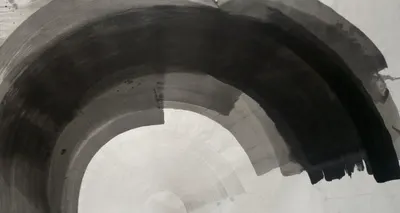
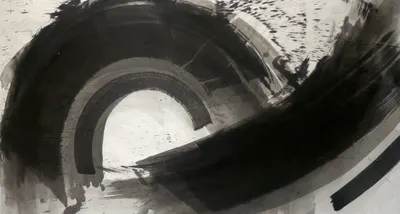
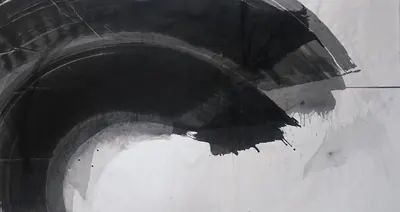
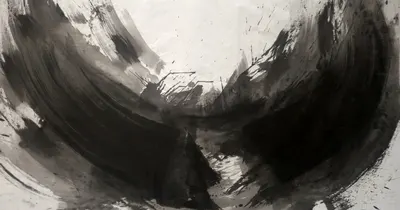
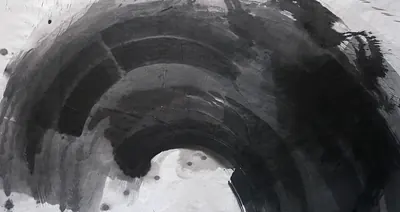
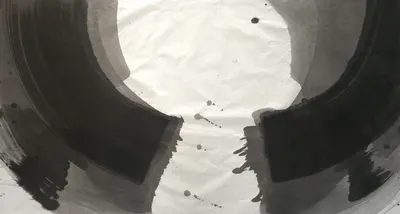
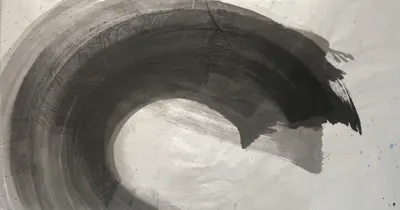
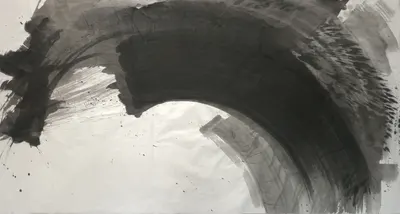
T_286 among all 419
Every painting of the year by date; this one is outlined.
Materials
- Paper
- Red Star Mo She Special Effect Xieyi Edition, half-raw (June 2025 batch), China Xuan Paper Co., Ltd., made 2025.06.07
- Ink MB4
- Yi De Ge Refined Ink Juice, Yi De Ge (Beijing)
- Ink MB5
- Boku-Undo Genso, Boku-Undo
- Ink MB6
- Yi De Ge Yun Tou Yan, Yi De Ge (Beijing)
Related