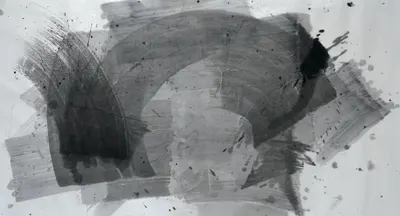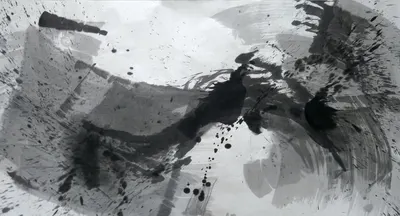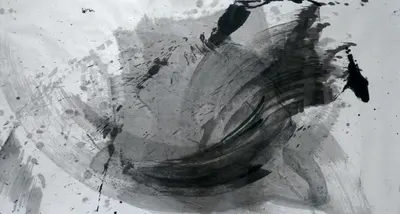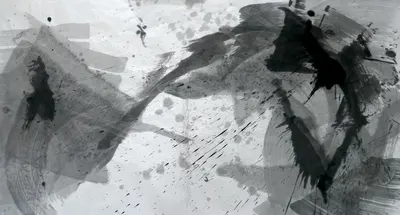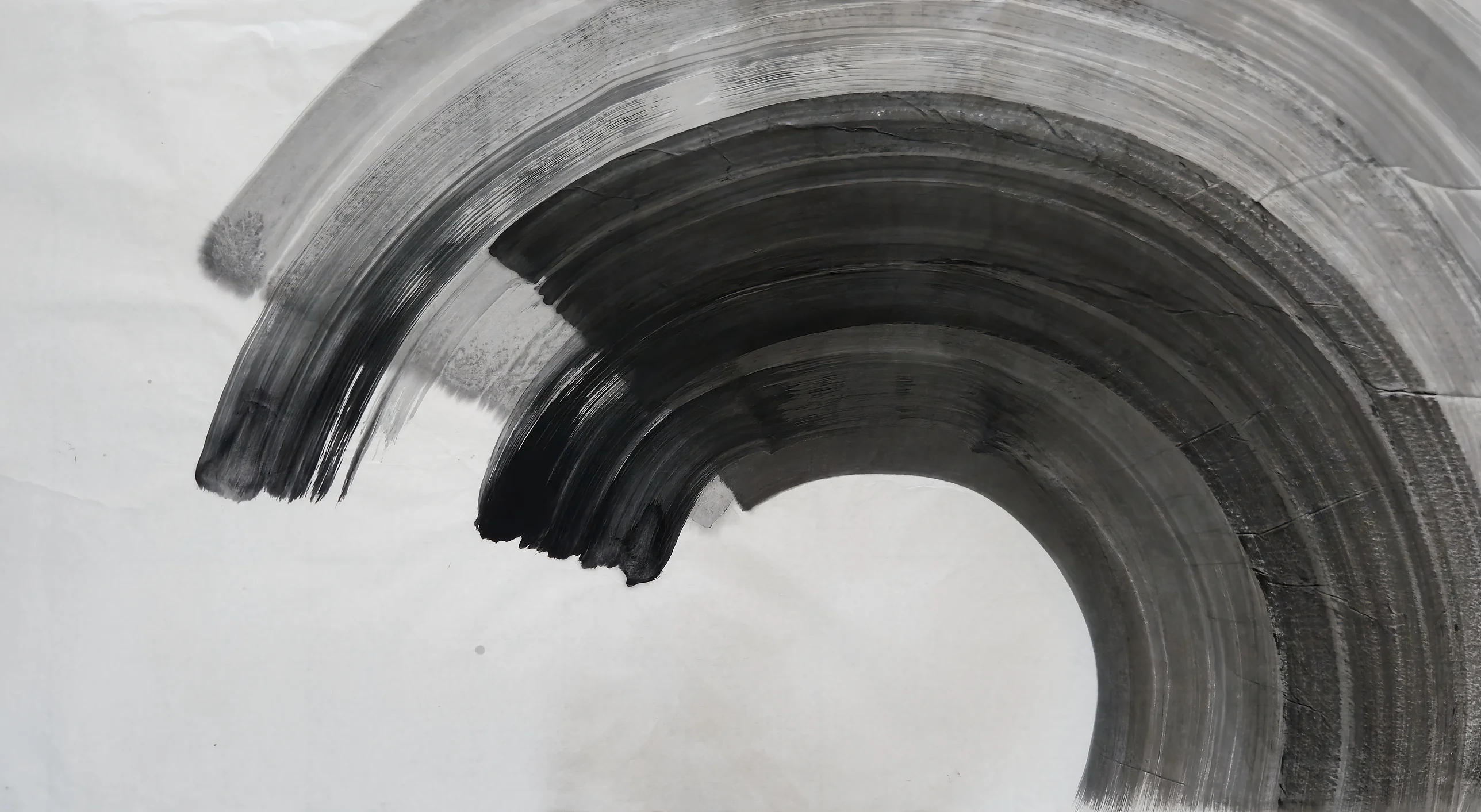

T_324
Record- Date
- 2026.05.31
- Dimensions
- 97 × 180 cm
- Paper
- Red Star Mo She Special Effect Xieyi Edition, raw
- Ink
- Yi De Ge Refined Ink Juice, Boku-Undo Genso, Yi De Ge Yun Tou Yan
How it was read
Read by the Visual Analysis Engine, version 23.8, on 2026.10.06: measured by code, then read 5 times by Claude Opus 5.5 against three reference paintings (R1 to R3), each read independent of the others. How the engine works.
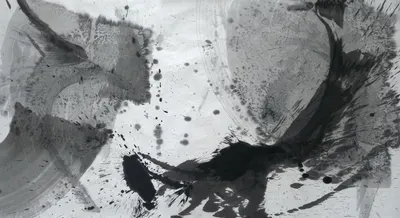
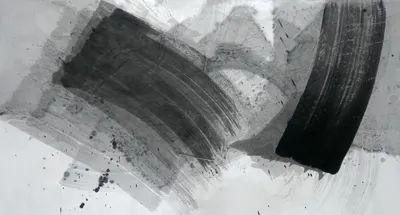
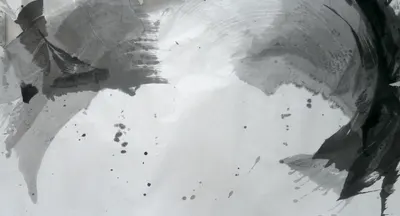
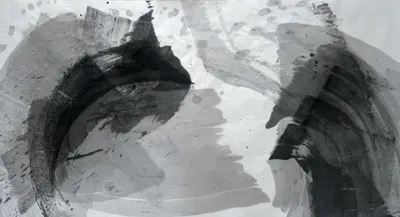
Three views of one sheet.
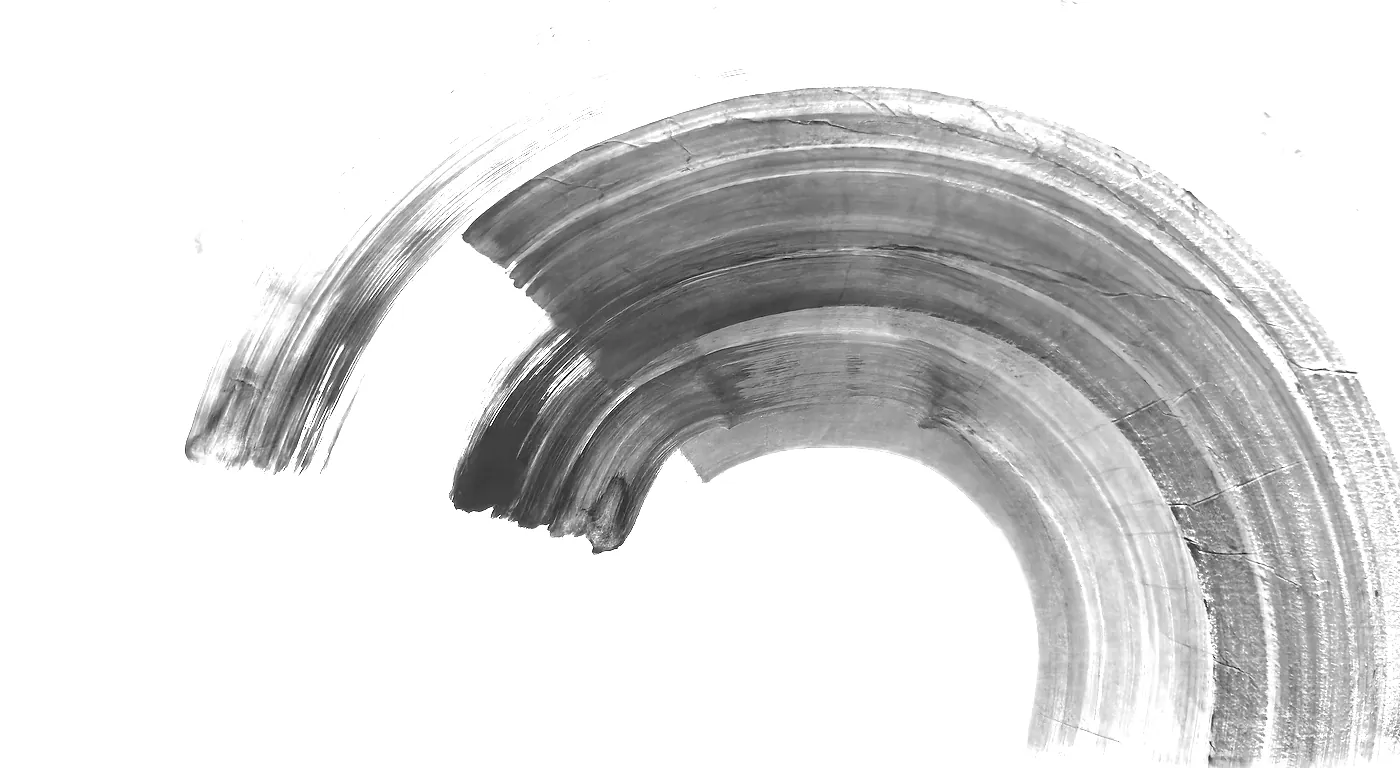
Left, the photograph. Centre, the tone stretch the model is shown beside it: the darkest 45% of tones spread over the whole range, so flat black, banding and stains show. Right, every pixel as the measuring code classes it: cyan black ink, deep teal translucent grey, stone the palest ink, near black bare paper.
2 families of tone.
Every inked pixel's brightness in 64 bins, smoothed; each circled peak holds at least 4% of the ink. Two or fewer: Tonal depth is held at the bottom rung whatever the model reads. A dense sheet of many translucent passes can count low here, so Layering is left to the reads. Life inside the black: 0.045 (under 0.045 reads as flat).
Five reads, agreeing on 3 of 5 qualities.
Each quality placed on its ladder by each read, and the mean the engine keeps. Where reads differ, they differ by one rung; close calls resolve down.
READ 1, IN ITS OWN WORDS
“A confident concentric-arc sheet related to R3, but with fewer passes, two tone families and near-flat dark interiors. A clumsy grey join and minor cracks keep it at an ordinary, working level.”
Arcs follow brush travel with split-bristle ends, but the grey square patch at the inner arc end is a clumsy join, and the left arc tails are stubby.
WEAKEST Pale grey square patch at inner arc's end
STRONGEST Large dark concentric arc sweeping right
Bristle banding and dry-brush grain run through the arcs, but dark modulation is 0.045 (borderline flat) and there are only two tonal steps.
WEAKEST Dense dark upper arc interior, close to flat
STRONGEST Banded grey inner arc, lower right
A pale grey outer arc pass sits under the dark arcs and stays legible where they overlap; there are only about two or three passes, without deep translucent ordering.
WEAKEST Only two tone families across the passes
STRONGEST Grey outer arc under dark arc, top
Strong arcing movement carries the eye from the left tips over the top to the bottom right. The empty lower left is shaped by the curve but is fairly passive.
WEAKEST Bottom-left empty paper slightly leftover
STRONGEST Sweeping arc from left tips to bottom right
Ink is controlled and the dry-brush grain is used. Hairline cracks show in the dark arcs, there is a faint brownish stain at the bottom centre and a small dot on the left, all minor.
WEAKEST Crackle lines through dark arc interior
STRONGEST Dry-brush grain on right outer band
5 distinct places, 0 major.
Each read must name every flaw and where it is, in a ninth of the sheet. Here the reads named flaws in 5 distinct places, 16 mentions in all across 5 reads; the number in each ninth is how many times a flaw was named there. Reads agreeing on a place strengthen the evidence for one flaw; they do not multiply it.
Measured from the 16-bit master.
The previous engine (V22) measured this sheet's master file: 7 principal ink masses traced (cyan), 6 enclosed voids at true size in their grid cells (amber), the main gesture from start to end (red). Of 27 edge segments, 48% crisp, 22% soft or bloomed, 30% broken.
The rating these readings produce, the rules applied and the arithmetic, with Peter's own rating where he gave one, are in the Archive record.
Date
2026.05.31, day 154 of the Crucible Year, one of 8 paintings from that date (6 shown). 10 works were registered in the fourteen days before. Paintings are dated by the day their batch was registered and photographed; each was finished that day or within the few days before. Phase: P3 The Floor Rises (working title).
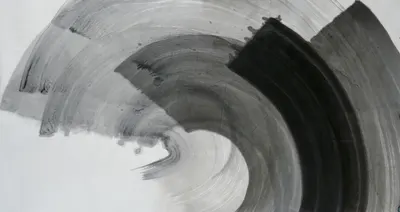
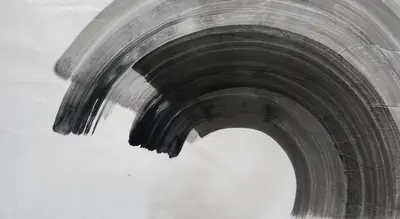
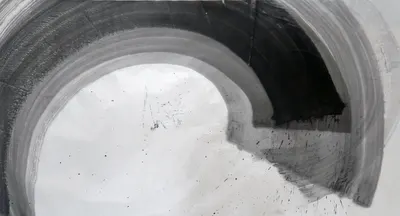
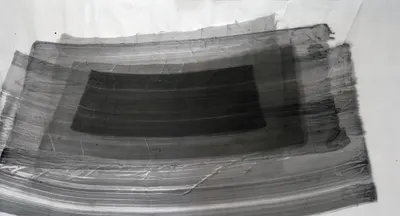
T_324 among all 402
Every painting of the year by date; this one is outlined.
Materials
- Paper
- Red Star Mo She Special Effect Xieyi Edition, raw, China Xuan Paper Co., Ltd., made 2025.12.08
- Ink MB4
- Yi De Ge Refined Ink Juice, Yi De Ge (Beijing)
- Ink MB5
- Boku-Undo Genso, Boku-Undo
- Ink MB6
- Yi De Ge Yun Tou Yan, Yi De Ge (Beijing)
Related