T_192
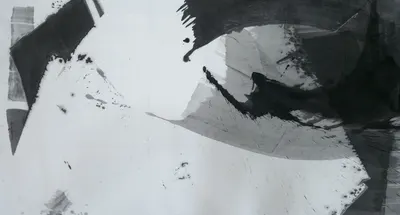
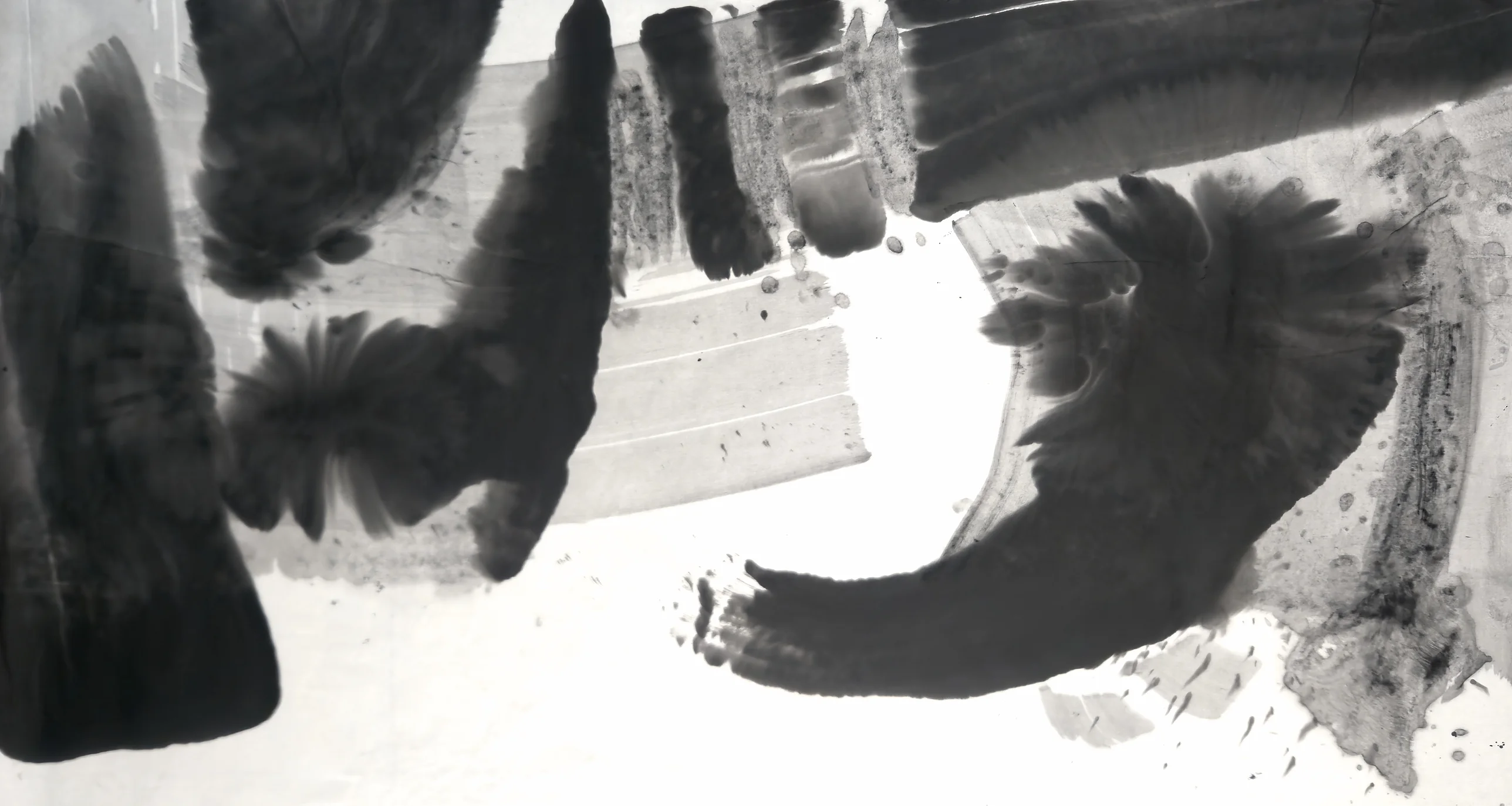
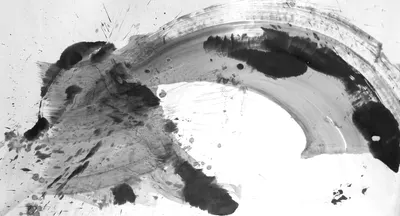
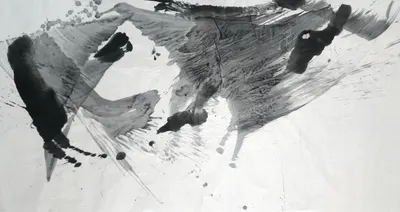
The engine's readingA dark hook with a feathered head sweeps up around a white clearing, under a crowded band of black blocks and beside a heavy slab at left.
Record- Date
- 2026.04.08
- Dimensions
- 97 × 180 cm
- Paper
- Red Star Mo She Special Effect Xieyi Edition, raw
- Ink
- Kuretake Shogei Kiwami, Yi De Ge Zhonghua, Boku-Undo Bokkou
The colony built the arm before it built the ship. Curved, feathered at the grip, reaching for an empty bay of white where something was supposed to dock. Every morning the crew checked the bay. Every morning, nothing. They kept the arm greased anyway, because a docking arm with no ship is still a promise, and promises are cheap to maintain on a world with this much weather. Up the hill the cargo containers sat jammed together where the last freighter dropped them, unopened, stencilled in a language the colony stopped teaching. I liked that colony. The colony produced no heroes. They swept the pad, logged the silence, and left the floodlights burning over a round of empty ground, humming.
The reading
Written by the engine after the painting was rated, from the settled findings, and checked by hand before approval. It explains the numbers; it may not change them.
- Structure
- left slab, top-left lobe, central wedge, top blocks, top-right band, lower-right hook
- Movement
- horizontal drift left to right; the hook curls upward against it
- Coverage
- ink on about three quarters of the paper
- Tone
- three tonal steps, weighted dark
- Layering
- pale grey horizontal washes under dark strokes, readable in centre and right
- Edges
- feathered on fans and hook head; blunt on left slab; grainy at right edge
- Feibai
- none
- Open paper
- rounded white clearing at centre right, held inside the hook
- Chance marks
- speckled wash and tide lines at right edge; droplet rings below top-centre strokes
- Frame
- ink runs off left, top and right; bottom edge mostly open
The eye goes to the hook first. It rises from the lower centre, swings right and opens into a feathered head, curling around a white clearing that the rest of the sheet leans toward. Everything else stacks in heavy darks along the top and down the left side.
The hook carries the sheet. Its body follows the travel of the brush, and on raw bark paper the wet head has drunk outward into fine feathers that still hold the stroke's shape. Above it, the top-right band has the most life of any dark here, with arcs of tone banded inside. Pale grey washes run beneath the central strokes and still read as an earlier pass.
The costs gather at the left and the top. The left slab is a blunt wall of nearly flat black. The top-centre blocks stand shoulder to shoulder with no air between them. The dark pass mostly covers the greys instead of building on them, and at the right edge a cloudy wash has dried into speckle and tide lines beside the hook.
One good gesture, one rich band, and a great deal of weight doing little. A plain, typical sheet.
How it was read
Read by the Visual Analysis Engine, version 23.8, on 2026.10.06: measured by code, then read 5 times by Claude Opus 5.5 against three reference paintings (R1 to R3), each read independent of the others. How the engine works.
Three views of one sheet.
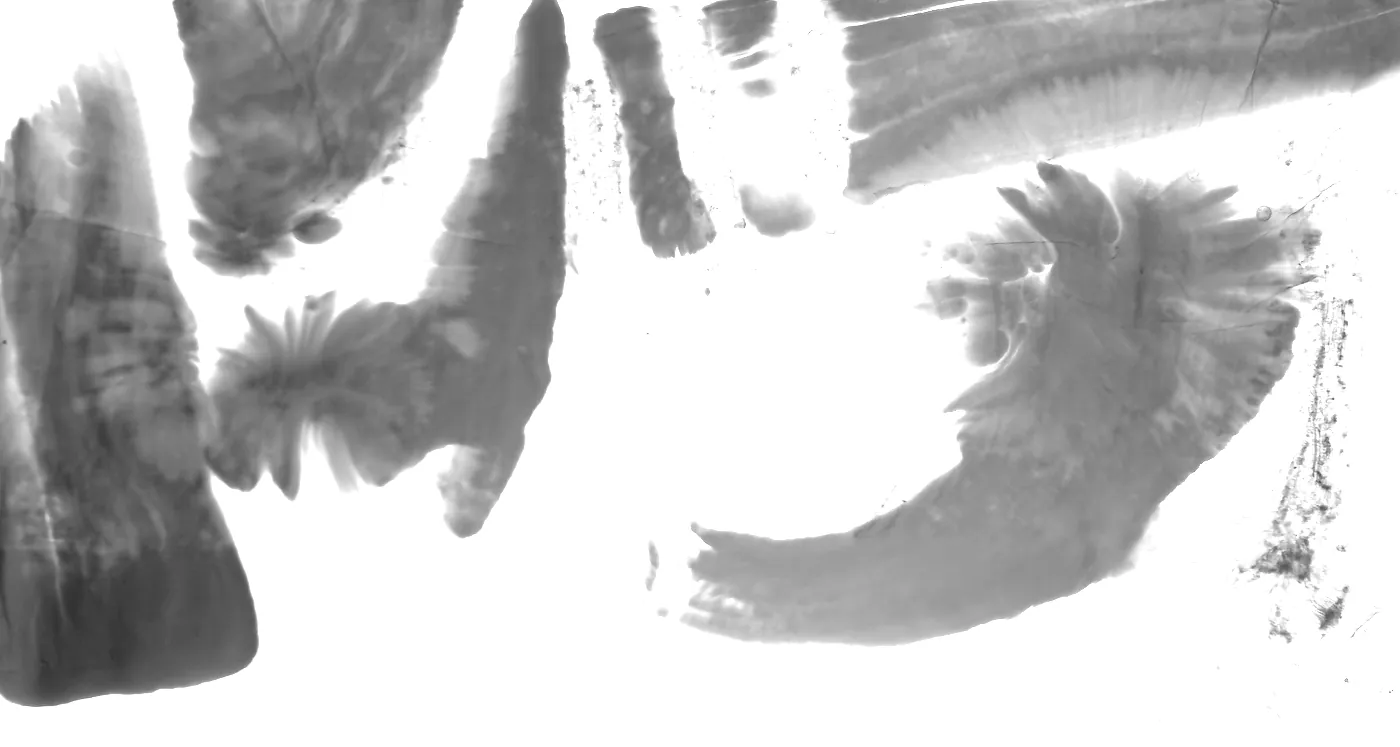
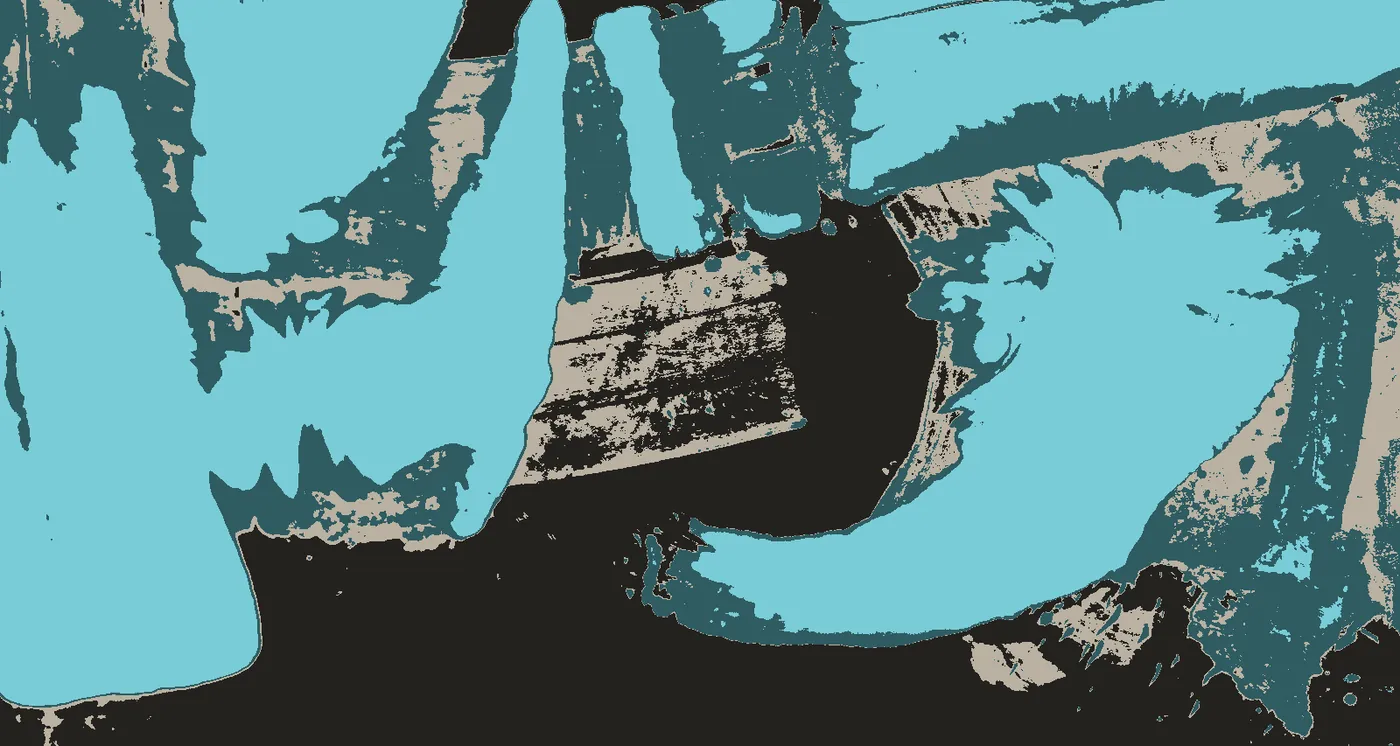
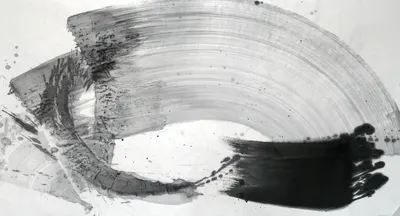
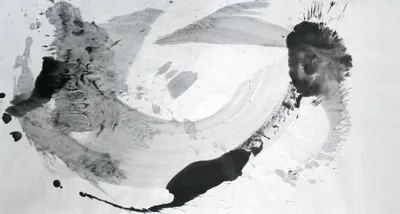
Left, the photograph. Centre, the tone stretch the model is shown beside it: the darkest 45% of tones spread over the whole range, so flat black, banding and stains show. Right, every pixel as the measuring code classes it: cyan black ink, deep teal translucent grey, stone the palest ink, near black bare paper.
3 families of tone.
Every inked pixel's brightness in 64 bins, smoothed; each circled peak holds at least 4% of the ink. Life inside the black: 0.046 (under 0.045 reads as flat).
Five reads, one answer.
Each quality placed on its ladder by each read, and the mean the engine keeps.
READ 1, IN ITS OWN WORDS
“A dense, energetic sheet. The hook and the top band are its best parts. The left half is crowded and bulky, layering is modest, and a mottled stained wash at the right edge counts against the material.”
The hook stroke at lower right and the top-right band hold their shape and follow the brush. The upper-left lobe and left wedge are bulky, and some joins look clumsy.
WEAKEST Bulky upper-left dark lobe with dissolved bottom edge
STRONGEST Lower-right sweeping hook stroke with feathered head
The top-right band has banding and the hook shows feathered gradation. The left wedge base is near-uniform black. Dark modulation is 0.046, just above the flat threshold.
WEAKEST Left vertical dark wedge, fairly flat dark bottom
STRONGEST Top-right band with banded arcs inside
Pale grey horizontal washes run beneath the dark verticals in the centre and the hook. Two or three passes can be read, but the darks mostly sit on top instead of building depth.
WEAKEST Dark marks largely cover the pale washes
STRONGEST Pale grey horizontal bands under the central dark strokes
The hook and the top band frame a shaped white void at centre-right. The left half is crowded with blocky masses, and the top-centre strokes are jammed together.
WEAKEST Crowded, jammed top centre column strip
STRONGEST Hook curving around the central white void
At the right edge, a pale wash beside the hook is mottled with granular specks and blotches, and droplet rings sit near the top-centre strokes. These are visible in the colour view next to principal masses.
WEAKEST Mottled cloudy grey wash at right edge
STRONGEST Feathered edges of the hook and the flower-like burst
6 distinct places, 1 major.
Each read must name every flaw and where it is, in a ninth of the sheet. Here the reads named flaws in 6 distinct places, 19 mentions in all across 5 reads; the number in each ninth is how many times a flaw was named there. Reads agreeing on a place strengthen the evidence for one flaw; they do not multiply it. A major flaw holds Material and surface at rung 1.
Measured from the 16-bit master.
The previous engine (V22) measured this sheet's master file: 3 principal ink masses traced (cyan), 7 enclosed voids at true size in their grid cells (amber), the main gesture from start to end (red). Of 25 edge segments, 48% crisp, 52% soft or bloomed, 0% broken.
The rating these readings produce, the rules applied and the arithmetic, with Peter's own rating where he gave one, are in the Archive record.
Date
2026.04.08, day 101 of the Crucible Year, one of 22 paintings from that date (11 shown). 37 works were registered in the fourteen days before. Paintings are dated by the day their batch was registered and photographed; each was finished that day or within the few days before. Phase: P1 Warm-up (working title).
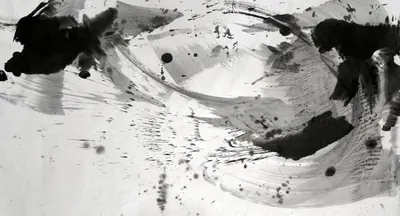
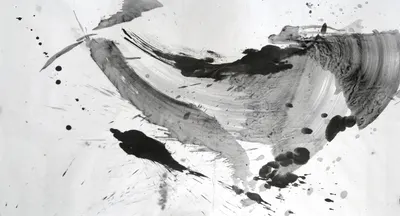
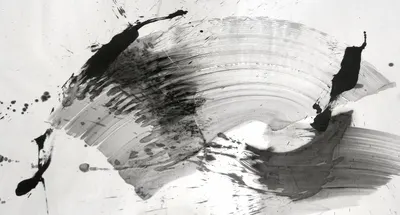
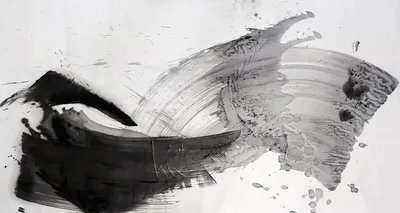
T_192 among all 402
Every painting of the year by date; this one is outlined.
Materials
- Paper
- Red Star Mo She Special Effect Xieyi Edition, raw, China Xuan Paper Co., Ltd., made 2025.12.08
- Ink MB1
- Kuretake Shogei Kiwami, Kuretake
- Ink MB2
- Yi De Ge Zhonghua, Yi De Ge (Beijing)
- Ink MB3
- Boku-Undo Bokkou, Boku-Undo
Related