T_198
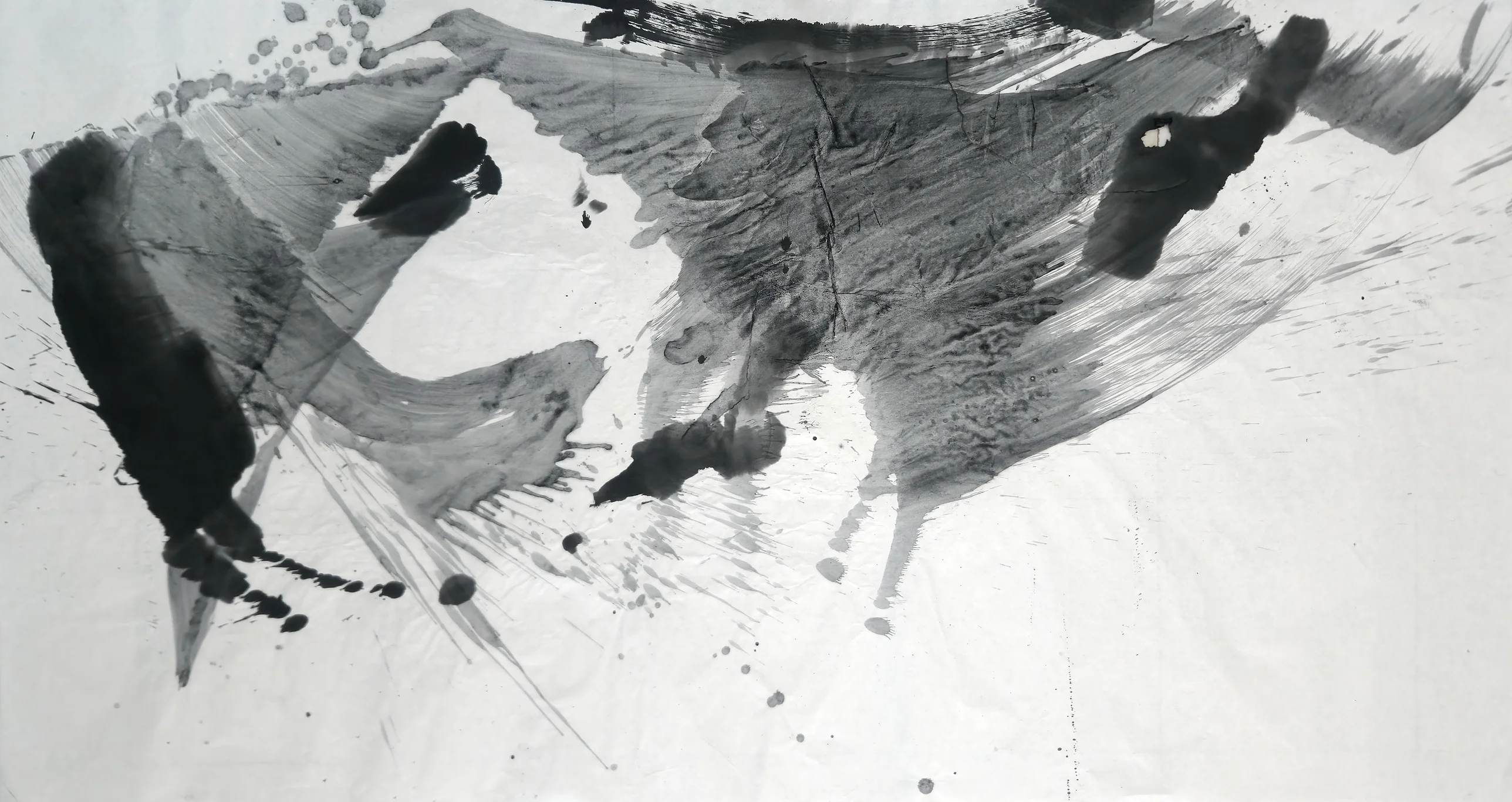
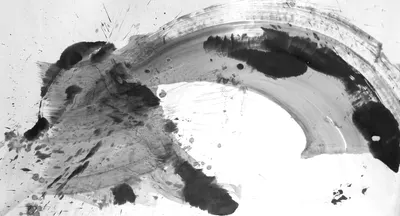
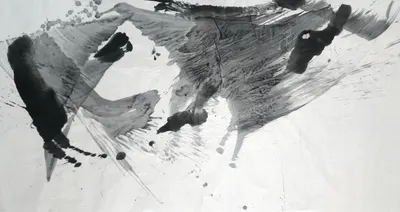
The engine's readingA black column at the left sends a streaked grey slope climbing to a dark lobe at the top right, while drips fall away beneath it.
Record- Date
- 2026.04.08
- Dimensions
- 97 × 180 cm
- Paper
- Red Star Mo She Special Effect Xieyi Edition, raw
- Ink
- Kuretake Shogei Kiwami, Yi De Ge Zhonghua, Boku-Undo Bokkou
The dark lobe at the top right has a pale hole in it, and it is a sock, worn through at the heel. In our house that went over a wooden mushroom and got darned, the needle running back and forth until a little woven window of grey wool sat where the hole had been, warmer than the rest of the sock. The long grey slope is the wool coming off the ball, and the black column at the left is the sewing tin, standing open with a trail of buttons spilling out of it. You put your hand inside the sock to hold it and look at it as if it might explain itself. Then the sock goes back in the drawer, mended, and the drawer shuts.
The reading
Written by the engine after the painting was rated, from the settled findings, and checked by hand before approval. It explains the numbers; it may not change them.
- Structure
- left black column, central grey fan, dark lobes at top right and lower centre
- Movement
- rising diagonal from lower left to upper right; drips and spatter fall against it
- Coverage
- ink on about three fifths of the paper
- Tone
- four tonal steps, weighted to the middle greys
- Layering
- pale washes, dry-brush grey, dark accents; readable at left column and centre
- Edges
- crisp on left column and top stroke; soft, blooming on dark lobes; broken at fan's rims
- Feibai
- present, along the upper right rim of the central grey sweep and in the top stroke
- Open paper
- broad wedge across the lower right, beneath the arc
- Chance marks
- spatter top left, drop trails lower left and centre, crease lines through central grey, pale hole in top-right lobe
- Frame
- ink runs off the top and left edges; bottom and right stay open
The eye meets the black column at the left and is sent uphill. A grey slope climbs from it across the middle of the sheet and lifts into a dark lobe at the top right. Drips and spatter fall the other way, toward the floor of the paper.
The central grey sweep is where the sheet is alive. The paper is raw bark with a hard grip on a dry brush, so the hairs leave streaks and grain, and the grey stays open across a long reach. Creases in the paper run through it as thin dark seams, and the sweep absorbs them. At the left, pale grey passes cross under the column and stay legible, and the column thins into a trail of drops with real conviction.
The blacks are the trouble. The lobe at the top right and the blot below centre are lumps, flat inside and soft at the rim where the raw paper spread them, and the pale hole in the upper one reads as damage. The lower right is paper left over, not held.
A good climb, then, with a living middle and nothing at the summit worth the effort. It sits where most sheets sit: capable in its centre, let down at its ends.
How it was read
Read by the Visual Analysis Engine, version 23.8, on 2026.10.06: measured by code, then read 5 times by Claude Opus 5.5 against three reference paintings (R1 to R3), each read independent of the others. How the engine works.
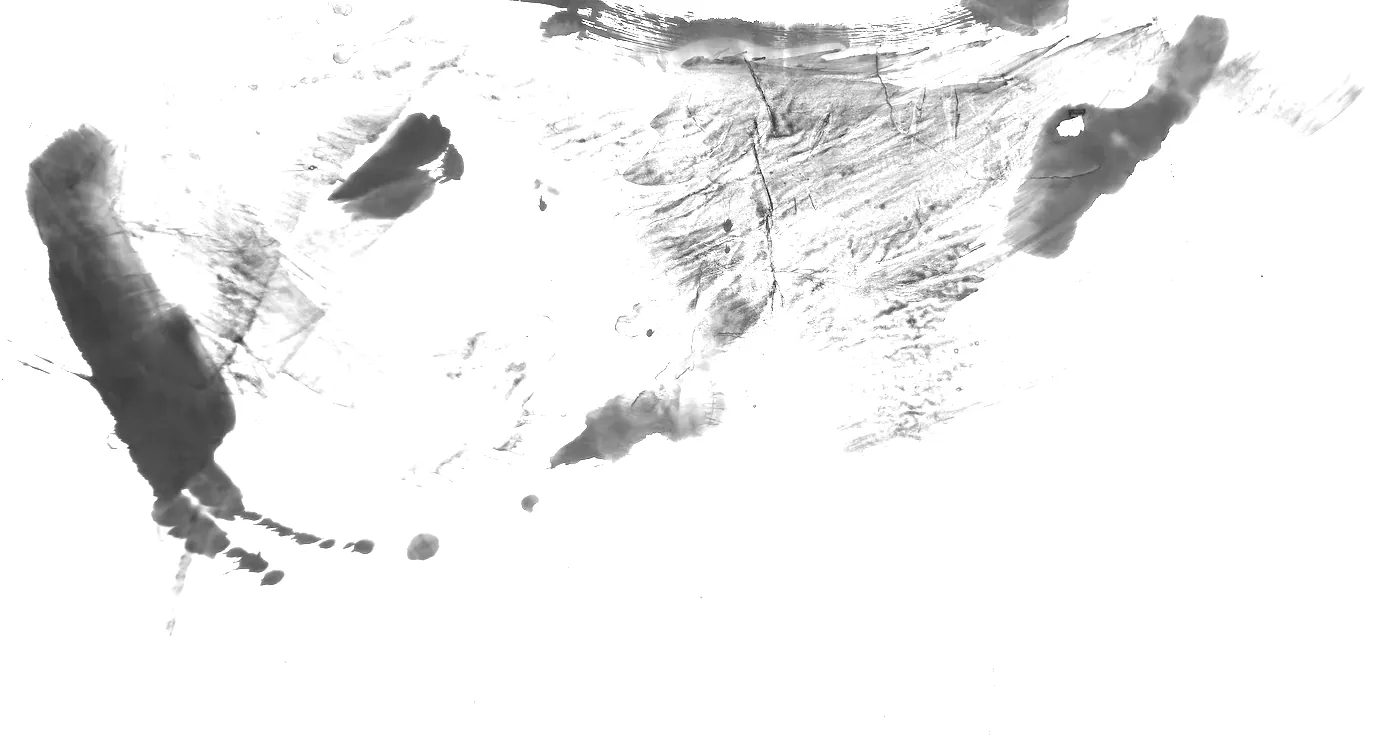
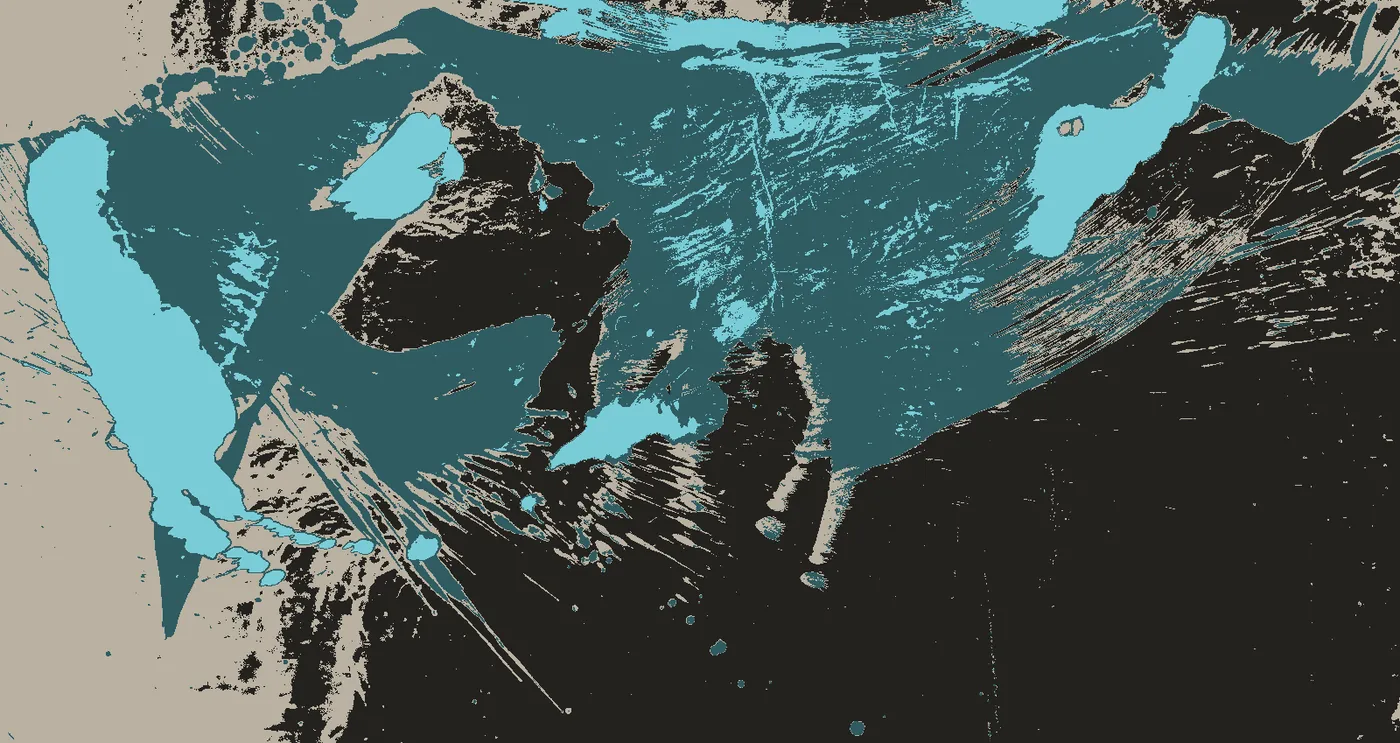
Three views of one sheet.
Left, the photograph. Centre, the tone stretch the model is shown beside it: the darkest 45% of tones spread over the whole range, so flat black, banding and stains show. Right, every pixel as the measuring code classes it: cyan black ink, deep teal translucent grey, stone the palest ink, near black bare paper.
4 families of tone.
Every inked pixel's brightness in 64 bins, smoothed; each circled peak holds at least 4% of the ink. Life inside the black: 0.048 (under 0.045 reads as flat).
Five reads, agreeing on 4 of 5 qualities.
Each quality placed on its ladder by each read, and the mean the engine keeps. Where reads differ, they differ by one rung; close calls resolve down.
READ 1, IN ITS OWN WORDS
“This is a gestural sheet like R2. It has a strong left column, a textured grey sweep in the centre, and lumpy dark blots. The empty paper at the lower right is unshaped. It is ordinary across all five ladders.”
Left dark column holds with a coherent tapering tail; the central grey sweep is textured but loose; the top-right dark mass and lower-centre blot are lumpy and blob-like.
WEAKEST Top-right dark blob, lumpy with hole, blob-like
STRONGEST Left vertical dark stroke with tapering drip trail
Central grey mass is richly grained with crinkle lines; left dark column shows some soft grading; dark modulation is 0.048, barely above flat; the top-right blob is mostly uniform.
WEAKEST Top-right dark blob fairly flat inside
STRONGEST Central grey sweep with streaked grain and ridges
Pale grey diagonal sweeps sit under the darker strokes and stay readable, with about two or three passes; the dark blots simply sit on top without building depth.
WEAKEST Dark blobs sit on top, little interplay
STRONGEST Grey diagonal washes crossing beneath left column
Ink mass rises from left to upper right with outward spatter, which gives the sheet direction; the lower right third is empty and unshaped, and the scattered blots weaken the focus.
WEAKEST Bottom-right empty paper is leftover
STRONGEST Diagonal sweep from left column to upper right
Dry-brush texture is used in the centre; paper creases cut through the grey mass; there is a bleached hole in the top-right blob; the spatter appears intended; no tide lines are visible.
WEAKEST Crinkle/crease lines through central grey mass
STRONGEST Dry-brush streaking in the central grey sweep
4 distinct places, 1 major.
Each read must name every flaw and where it is, in a ninth of the sheet. Here the reads named flaws in 4 distinct places, 13 mentions in all across 5 reads; the number in each ninth is how many times a flaw was named there. Reads agreeing on a place strengthen the evidence for one flaw; they do not multiply it. A major flaw holds Material and surface at rung 1.
Measured from the 16-bit master.
The previous engine (V22) measured this sheet's master file: 2 principal ink masses traced (cyan), 5 enclosed voids at true size in their grid cells (amber), the main gesture from start to end (red). Of 15 edge segments, 53% crisp, 13% soft or bloomed, 33% broken.
The rating these readings produce, the rules applied and the arithmetic, with Peter's own rating where he gave one, are in the Archive record.
Date
2026.04.08, day 101 of the Crucible Year, one of 22 paintings from that date (11 shown). 37 works were registered in the fourteen days before. Paintings are dated by the day their batch was registered and photographed; each was finished that day or within the few days before. Phase: P1 Warm-up (working title).
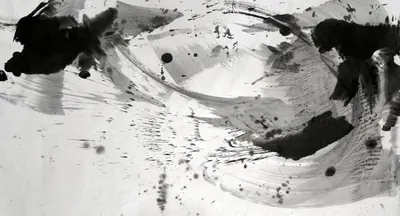
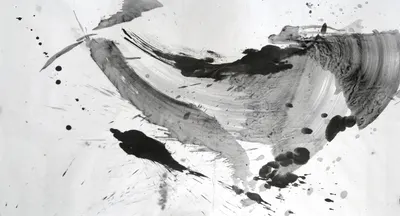
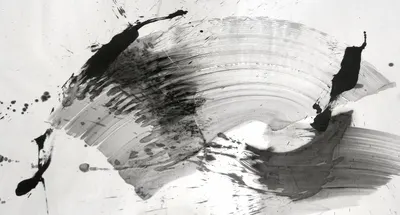
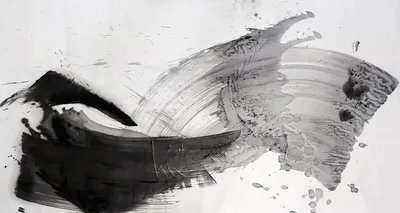
T_198 among all 402
Every painting of the year by date; this one is outlined.
Materials
- Paper
- Red Star Mo She Special Effect Xieyi Edition, raw, China Xuan Paper Co., Ltd., made 2025.12.08
- Ink MB1
- Kuretake Shogei Kiwami, Kuretake
- Ink MB2
- Yi De Ge Zhonghua, Yi De Ge (Beijing)
- Ink MB3
- Boku-Undo Bokkou, Boku-Undo
Related